
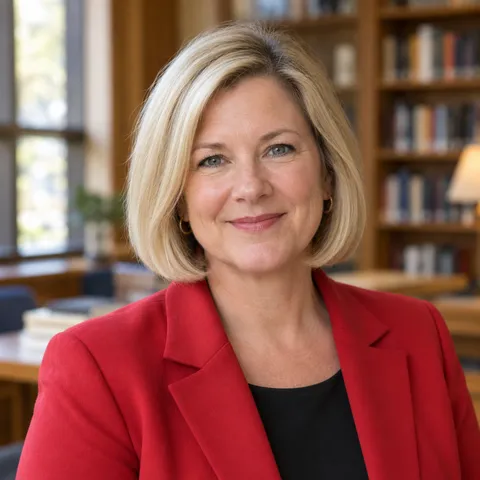
Dr. Audrey Kessler
Associate Teaching Professor of Business Communication
Course coordinator for all COMM 210 sections, 2026–27
- Office
- Tidewell Hall 326
- akessler
@university.alkimi.ai
COMM 210 · Business Administration
Audience analysis, professional correspondence, executive summaries, data-driven reports, persuasive presentations, and team communication for business settings, with individual coaching on writing and speaking.
Fall 2026 · At a glance
200-level courses: intermediate, lower-division courses suitable for sophomores and above. Details: Undergraduate Catalog §9.12.
Associate Teaching Professor of Business Communication
Course coordinator for all COMM 210 sections, 2026–27
Questions about a major or your plan: Academic Advising Center, Lovell Hall 101, (555) 555-0158.
Sections
COMM 210 is a multi-section course. Each section's days, time, room, and instructor are listed in AlkimiHub; every section follows this syllabus.
Final exam
No exam in the finals period. The final project deadline is listed under key dates.
Coordinator office hours
Wed & Fri, 3:00–4:30 p.m.
Tidewell Hall 326
Thu, 11:00 a.m.–12:00 p.m.
Virtual (Zoom link in Canvas)
Your section instructor posts their own office hours in Canvas.
You may use generative AI tools to brainstorm audience personas, outline presentation slide structures, and check grammar or readability on early drafts of written assignments. You may not submit AI-generated text as your own writing, generate executive summaries or report bodies using AI, or use AI tools to generate presentation speaking scripts.
From the syllabus
Grading
Letter grades follow the university scale (Student Handbook §4.1).
Key dates
First day of classes Past
Professional Correspondence Suite Past
Executive Summary & Analytical Business Report Next
Individual Persuasive Presentation
Team Strategic Communication Briefing
Strategic Business Communication Final Portfolio
Required materials
Courtland L. Bovee and John V. Thill. Business Communication Today. 15th ed., Pearson, 2021.
Approx. $45 digital rental, $90 print purchase.
Alkimi Business Communication Style Guide and Case Packet.
Free digital access provided on Canvas.
Degree planning
What to take first, what this course opens up, and the requirements it can satisfy, from the Undergraduate Catalog.
Catalog wording: ENGL 101.
Every course also counts toward the 120 credits needed for a bachelor's degree. Confirm your plan with your advisor or the Academic Advising Center.
No AP exam awards credit for COMM 210 (Undergraduate Catalog §3.11).
Registration
COMM 210 is offered in both the fall and spring semesters. Register through AlkimiHub self-service registration, which opens by credit standing. Until the add deadline, you don't need instructor permission as long as seats remain and you've met the prerequisites. Details: Student Handbook §3.3.
When a seat opens, AlkimiHub offers it to the first student on the waitlist and emails you. You have 24 hours to claim it before it goes to the next student. Details: Student Handbook §3.10.
Spring 2027 registration opens
By credit standing, in AlkimiHub.
Fall 2026 withdrawal deadline
Last day to withdraw with a W or elect Pass/No Pass.
Spring 2027 add deadline
Last day to add a course or change sections (11:59 p.m.).
Fall 2027 registration opens
By credit standing, in AlkimiHub.
The Fall 2026 add deadline passed on Sep 2, 2026.
All dates: academic calendar. Registration help: Office of the Registrar.
Official course syllabus
The syllabus as filed with the department and posted in Canvas for Fall 2026.
Term: Fall 2026
Credits: 3.0
Meeting Times & Location: Multiple sections. Your section's days, time, room, and instructor are listed in AlkimiHub and on your Canvas course page.
Modality: In-Person
akessler@university.alkimi.ai
Audience analysis, professional correspondence, executive summaries, data-driven reports, persuasive presentations, and team communication for business settings, with individual coaching on writing and speaking. COMM 210 prepares future business leaders to communicate complex managerial, financial, and strategic information clearly and persuasively across modern organizational channels. Students practice crafting concise executive correspondence, synthesizing quantitative data into decision-oriented analytical reports, and delivering professional oral presentations with confidence. Through structured peer workshops and personalized coaching, the course develops strategic audience adaptation, ethical business messaging, crisis communication skills, and collaborative team communication habits essential in corporate workplaces.
ENGL 101.
Upon successful completion of COMM 210, students will be able to:
In accordance with Alkimi University Academic Policies (Student Handbook §5.8), COMM 210 operates under AI Level 2.
All sections follow this common weekly schedule. Section meeting days vary, so dates are shown by week; your section instructor posts exact class dates in Canvas.
| Week | Dates | Topics & Readings | Assignments & Deadlines |
|---|---|---|---|
| Week 1 | Aug 26–Aug 28 | Strategic Foundations and Audience Analysis: Foundations of business communication; audience analysis, sender-receiver models, professional credibility, and ethical communication standards. Reading: Bovee & Thill, Ch. 1–2 | First day of classes: Wed Aug 26. |
| Week 2 | Aug 31–Sep 4 | The Business Writing Process and Direct vs. Indirect Framing: Three-step writing process: planning, writing, and completing; direct vs. indirect organizational strategies for routine, persuasive, and negative messages. Reading: Bovee & Thill, Ch. 3–5 | Wed Sep 2: Add/section change deadline. |
| Week 3 | Sep 8–Sep 11 | Routine Correspondence and Workplace Messaging: Crafting concise professional emails, memos, and workplace messages; etiquette in digital collaboration tools and professional tone. Reading: Bovee & Thill, Ch. 6 | Mon Sep 7: Labor Day (no classes). Wed Sep 9: Census date (last day to drop without a W). |
| Week 4 | Sep 14–Sep 18 | Delivering Negative News and Persuasive Requests: Strategies for delivering negative news; buffers, clear explanations, and constructive closing; Correspondence Suite due Friday. Reading: Bovee & Thill, Ch. 7–8 | Professional Correspondence Suite due Fri Sep 18 at 11:59 p.m. |
| Week 5 | Sep 21–Sep 25 | Visual Communication and Data Visualization: Visual design principles for business documents; selecting charts, tables, and infographics to communicate financial and operational data. Reading: Bovee & Thill, Ch. 9 | — |
| Week 6 | Sep 28–Oct 2 | Business Research and Source Synthesis: Conducting secondary business research; evaluating credible corporate and market sources; synthesizing findings and ethical documentation. Reading: Bovee & Thill, Ch. 10 | — |
| Week 7 | Oct 5–Oct 9 | Analytical Reports and Proposal Architecture: Structuring formal business proposals and analytical reports; defining problem statements, criteria, alternatives, and recommendations. Reading: Bovee & Thill, Ch. 11–12 | — |
| Week 8 | Oct 14–Oct 16 | Executive Summaries and Report Drafting (Fall Break Week): Drafting executive summaries, introduction sections, and conclusions; maintaining reader engagement and clarity (Fall Break week). Reading: Bovee & Thill, Ch. 13 | Oct 12–Oct 13: Fall break (no classes). Fri Oct 16: Midterm grades due. |
| Week 9 | Oct 19–Oct 23 | Report Polish, Peer Coaching, and Analytical Report Submission: Revision strategies, editing for conciseness, eliminating jargon, and peer editing workshops; Executive Summary & Analytical Report due Friday. Reading: Bovee & Thill, Ch. 14 | Executive Summary & Analytical Business Report due Fri Oct 23 at 11:59 p.m. |
| Week 10 | Oct 26–Oct 30 | Designing Executive Business Presentations: Principles of executive presentations; storyboard construction, visual slide design, slide decks vs. reading decks, and storytelling with data. Reading: Bovee & Thill, Ch. 15 | — |
| Week 11 | Nov 2–Nov 6 | Public Speaking Mechanics and Individual Presentations: Vocal variety, pacing, nonverbal presence, handling audience Q&A; delivering individual persuasive presentations in class. Reading: Bovee & Thill, Ch. 16 | Fri Nov 6: Last day to withdraw (W) or elect Pass/No Pass. Individual Persuasive Presentation (in class this week). |
| Week 12 | Nov 9–Nov 13 | Team Communication and Collaborative Workflows: Small group communication dynamics, collaborative document authoring, constructive conflict management, and division of presentation roles. Reading: Style Guide and selected readings | — |
| Week 13 | Nov 16–Nov 20 | Crisis Communication and Stakeholder Engagement: Crisis communication principles; stakeholder mapping, holding statements, press releases, and reputation management during organizational disruption. Reading: Case Packet, Crisis Studies | — |
| Week 14 | Nov 23–Nov 24 | Team Presentations and Executive Briefings (Thanksgiving Week): Team presentation rehearsals, peer coaching, and formal delivery of collaborative crisis briefings in class (Thanksgiving week). Reading: Case Packet, Briefing Guide | Nov 25–Nov 27: Thanksgiving break (no classes). Team Strategic Communication Briefing (in class this week). |
| Week 15 | Nov 30–Dec 4 | Cross-Cultural Communication and Global Workplaces: Cross-cultural business communication, global negotiation etiquette, high-context vs. low-context cultures, and inclusive communication. Reading: Bovee & Thill, Ch. 17 | — |
| Week 16 | Dec 7–Dec 9 | Communication Portfolio Synthesis and Review: Portfolio curation, reflective assessment of professional communication growth, career-readiness communication strategies, and final synthesis. Reading: Portfolio Guidelines on Canvas | Wed Dec 9: Last day of classes. Thu Dec 10: Reading Day. |
| Finals | Dec 14 | Strategic Business Communication Final Portfolio due Monday, December 14, 2026 at 11:59 p.m. | No final examination. |
Because COMM 210 relies heavily on interactive workshops, speaking simulations, and collaborative peer coaching, regular attendance is mandatory. You are permitted two unexcused absences without penalty; additional unexcused absences reduce your final grade by one third of a letter grade. Missing more than five class sessions will result in failure of the course. Students who miss the first two class meetings without notifying the instructor may be dropped. Students may miss class for religious observance without penalty if they notify the instructor in writing within the first two weeks of the semester (by Wednesday, September 9, 2026). Absences for university-sponsored activities (athletics, performances, conferences) are excused with a letter from the sponsoring office at least one week in advance.
Major written deliverables and presentation slide decks lose 10% for each calendar day they are late and cannot be submitted more than three days past the deadline. In-class presentations cannot be rescheduled except in cases of documented illness or university-approved emergencies.
COMM 210 has no final examination. The strategic business communication final portfolio takes its place. Nothing is due on Reading Day (Thursday, December 10, 2026).
Alkimi University is an academic community devoted to rigorous scholarship, open intellectual inquiry, and uncompromising ethical conduct. All students are subject to the regulations of the Alkimi University Academic Integrity Policy. Academic dishonesty—including plagiarism, cheating on examinations, unauthorized collaboration, fabrication of empirical data, and unauthorized submission of academic work generated by artificial intelligence—undermines the integrity of the university and carries severe disciplinary sanctions. Sanctions range from a failing grade on an assignment or exam to an administrative course failure recorded as an 'XF' on the official transcript, academic suspension, or expulsion. Suspected violations are formally investigated and resolved through the Office of Academic Integrity in accordance with Faculty Handbook §6. For detailed information, consult the Office of Academic Integrity, Lovell Hall 315, (555) 555-0163, integrity@university.alkimi.ai.
Alkimi University is committed to providing equitable educational access and reasonable accommodations for all students with documented disabilities, including physical, sensory, psychological, learning, and chronic health conditions. Students requesting academic accommodations must formally register with the Office of Accessibility Services, Harlan Hall 204, (555) 555-0155, access@university.alkimi.ai. Once approved, students will receive an official Faculty Accommodation Letter detailing approved accommodations. Students should present this letter to the instructor as early in the semester as possible, and at least one week prior to any exam or assignment requiring accommodation. Accommodations cannot be applied retroactively.
Your physical health, psychological well-being, and mental health are essential to your academic success. If you experience heightened stress, anxiety, depressive symptoms, personal trauma, or academic burnout, free, confidential counseling and medical care are available through the Hollis Health & Counseling Center, located in the Hollis Center. Routine appointments are available Monday–Friday 8:00 a.m.–6:00 p.m. and Saturday 10:00 a.m.–2:00 p.m. during the semester by calling (555) 555-0190 or emailing health@university.alkimi.ai. Urgent, 24/7 crisis psychological counseling is accessible immediately at (555) 555-0199.
advising@university.alkimi.ai
askalibrarian@university.alkimi.ai
health@university.alkimi.ai
BUS, ACCT, COMM, FIN, MGT, MKT courses