
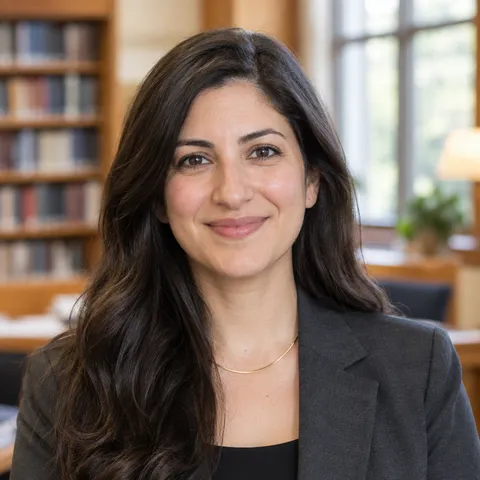
Dr. Layla Nasser
Assistant Professor of Accounting
Instructor for ACCT 311, Fall 2026
- Office
- Tidewell Hall 308
- lnasser
@university.alkimi.ai
ACCT 311 · Business Administration
Continuation of ACCT 310 covering current and long-term liabilities, leases, income taxes, pensions, stockholders' equity, earnings per share, accounting changes, and the statement of cash flows.
Fall 2026 · At a glance
300-level courses: advanced, upper-division courses requiring prior foundational preparation. Counts toward the 36 upper-division credits every bachelor's degree requires (Undergraduate Catalog §2.3). Details: Undergraduate Catalog §9.12.
Assistant Professor of Accounting
Instructor for ACCT 311, Fall 2026
Questions about a major or your plan: Academic Advising Center, Lovell Hall 101, (555) 555-0158.
Class meetings
Tue & Thu, 9:30–10:45 a.m.
Tidewell Hall 120
Final exam
Tuesday, December 15, 2026
8:00–10:00 a.m., Tidewell Hall 120
Office hours
Mon & Fri, 11:30 a.m.–1:00 p.m.
Tidewell Hall 308
Tue, 2:00–3:00 p.m.
Virtual (Zoom link in Canvas)
You may use generative AI tools to review FASB Accounting Standards Codification definitions, check spreadsheet formula syntax, and brainstorm structure for technical memos. You may not use AI tools during in-class examinations, nor may you submit AI-generated journal entries, calculations, or written technical memos as your own work.
From the syllabus
Grading
Letter grades follow the university scale (Student Handbook §4.1).
Key dates
First day of classes Past
Midterm Examination 1 Past
Midterm Examination 2 Next
FASB Codification Research Memo
Required materials
Donald E. Kieso, Jerry J. Weygandt, and Terry D. Warfield. Intermediate Accounting. 18th ed., Wiley, 2022.
Approx. $65 digital rental, $140 print purchase.
Financial Accounting Standards Board (FASB). Accounting Standards Codification (FASB ASC).
Free academic access provided via Alkimi Library databases.
Degree planning
What to take first, what this course opens up, and the requirements it can satisfy, from the Undergraduate Catalog.
Catalog wording: ACCT 310.
Every course also counts toward the 120 credits needed for a bachelor's degree. Confirm your plan with your advisor or the Academic Advising Center.
No AP exam awards credit for ACCT 311 (Undergraduate Catalog §3.11).
Registration
ACCT 311 is offered in the fall semester. Register through AlkimiHub self-service registration, which opens by credit standing. Until the add deadline, you don't need instructor permission as long as seats remain and you've met the prerequisites. Details: Student Handbook §3.3.
When a seat opens, AlkimiHub offers it to the first student on the waitlist and emails you. You have 24 hours to claim it before it goes to the next student. Details: Student Handbook §3.10.
Fall 2026 withdrawal deadline
Last day to withdraw with a W or elect Pass/No Pass.
Fall 2027 registration opens
By credit standing, in AlkimiHub.
The Fall 2026 add deadline passed on Sep 2, 2026.
All dates: academic calendar. Registration help: Office of the Registrar.
Official course syllabus
The syllabus as filed with the department and posted in Canvas for Fall 2026.
Term: Fall 2026
Credits: 3.0
Lecture Times & Location: Tuesday & Thursday 9:30–10:45 a.m., Tidewell Hall 120
Modality: In-Person
lnasser@university.alkimi.ai
Continuation of ACCT 310 covering current and long-term liabilities, leases, income taxes, pensions, stockholders' equity, earnings per share, accounting changes, and the statement of cash flows. ACCT 311 is the second course in the financial accounting sequence, providing rigorous technical study of balance sheet liability and equity accounts, as well as complex reporting standards. Building upon foundational financial accounting concepts, the course analyzes the recognition, measurement, and disclosure requirements for leases under ASC 842, deferred income taxes under ASC 740, postretirement benefits, share-based compensation, dilutive securities, and the statement of cash flows. Students develop fluency in navigating the FASB Accounting Standards Codification and applying US GAAP to complex corporate transactions.
ACCT 310.
Upon successful completion of ACCT 311, students will be able to:
In accordance with Alkimi University Academic Policies (Student Handbook §5.8), ACCT 311 operates under AI Level 2.
| Week | Dates | Topics & Readings | Assignments & Deadlines |
|---|---|---|---|
| Week 1 | Aug 27 | Current Liabilities and Contingencies: Review of the conceptual framework; nature, valuation, and classification of current liabilities; accounting for short-term debt and contingencies. Reading: Kieso et al., Ch. 13 | First day of classes: Wed Aug 26. |
| Week 2 | Sep 1, 3 | Long-Term Liabilities: Bonds and Notes Payable: Bonds payable issuance, pricing at par, premium, and discount; effective-interest method of amortization; long-term notes payable. Reading: Kieso et al., Ch. 14 (pp. 710–745) | Wed Sep 2: Add/section change deadline. |
| Week 3 | Sep 8, 10 | Debt Extinguishment and Special Financing: Early extinguishment of debt, troubled debt restructurings, fair value option, and off-balance-sheet financing arrangements. Reading: Kieso et al., Ch. 14 (pp. 746–775) | Mon Sep 7: Labor Day (no classes). Wed Sep 9: Census date (last day to drop without a W). |
| Week 4 | Sep 15, 17 | Stockholders' Equity: Capital and Retained Earnings: Corporate capital structure, issuance of par and no-par shares, treasury stock transactions, cash and stock dividends, and property dividends. Reading: Kieso et al., Ch. 15 | — |
| Week 5 | Sep 22, 24 | Dilutive Securities, Stock Compensation, and Midterm 1: Convertible bonds, convertible preferred stock, stock warrants, restricted stock, and share options; Midterm Examination 1 in class. Reading: Kieso et al., Ch. 16 (pp. 830–860) | Midterm Examination 1 (in class). |
| Week 6 | Sep 29, Oct 1 | Basic and Diluted Earnings Per Share: Simple vs. complex capital structures; basic EPS formula; treasury stock method and if-converted method for diluted earnings per share. Reading: Kieso et al., Ch. 16 (pp. 861–895) | — |
| Week 7 | Oct 6, 8 | Investments in Debt and Equity Securities: Debt investments (held-to-maturity, trading, available-for-sale); equity investments without significant influence; fair value through net income. Reading: Kieso et al., Ch. 17 | — |
| Week 8 | Oct 15 | Revenue Recognition Principles (Fall Break Week): The five-step revenue recognition model under ASC 606; contract assets and liabilities; accounting for performance obligations satisfied over time. Reading: Kieso et al., Ch. 18 | Oct 12–Oct 13: Fall break (no classes). |
| Week 9 | Oct 20, 22 | Accounting for Leases: Lessee Perspective: ASC 842 criteria; finance vs. operating leases for lessees; initial measurement of lease liability and right-of-use asset; subsequent amortization. Reading: Kieso et al., Ch. 21 (pp. 1150–1185) | — |
| Week 10 | Oct 27, 29 | Accounting for Leases: Lessor Perspective and Midterm 2: Lessor accounting for sales-type, direct financing, and operating leases; residual values; sale-leaseback transactions; Midterm Examination 2 in class. Reading: Kieso et al., Ch. 21 (pp. 1186–1220) | Midterm Examination 2 (in class). |
| Week 11 | Nov 3, 5 | Accounting for Income Taxes: Fundamentals of accounting for income taxes under ASC 740; temporary vs. permanent differences; deferred tax assets and liabilities; valuation allowances. Reading: Kieso et al., Ch. 19 | Fri Nov 6: Last day to withdraw (W) or elect Pass/No Pass. |
| Week 12 | Nov 10, 12 | Accounting for Pensions and Postretirement Benefits: Defined contribution vs. defined benefit plans; projected benefit obligation; pension plan assets; net periodic pension expense calculation and reporting. Reading: Kieso et al., Ch. 20 | — |
| Week 13 | Nov 17, 19 | Accounting Changes and Error Analysis: Changes in accounting principles, estimates, and reporting entity; correction of accounting errors; prior period adjustments; FASB research memo due. Reading: Kieso et al., Ch. 22 | FASB Codification Research Memo due Fri Nov 20 at 11:59 p.m. |
| Week 14 | Nov 24 | Statement of Cash Flows: Operating Activities: Purpose and format of the cash flows statement; operating cash flows under the indirect method; adjustments for noncash items and working capital. Reading: Kieso et al., Ch. 23 (pp. 1280–1315) | Nov 25–Nov 27: Thanksgiving break (no classes). |
| Week 15 | Dec 1, 3 | Statement of Cash Flows: Advanced Applications: Operating cash flows under the direct method; investing and financing cash flows; noncash investing and financing activities; comprehensive worksheet approach. Reading: Kieso et al., Ch. 23 (pp. 1316–1355) | — |
| Week 16 | Dec 8 | Financial Statement Disclosures and Course Synthesis: Full disclosure principle, notes to financial statements, subsequent events, segment reporting, and comprehensive review for the final exam. Reading: Kieso et al., Ch. 24 and Review | Wed Dec 9: Last day of classes. Thu Dec 10: Reading Day. |
| Finals | Dec 15 | Comprehensive Final Examination: Tuesday, December 15, 2026, 8:00–10:00 a.m., Tidewell Hall 120. | Scheduled during the university final examination period in Tidewell Hall 120. |
Class attendance in Tidewell Hall 120 is essential for mastering complex GAAP standards and problem-solving methodologies. If you must miss a class session due to illness or university-sponsored commitments, please notify Dr. Nasser in advance and coordinate with a classmate to review lecture notes. Students who miss the first two class meetings without notifying the instructor may be dropped. Students may miss class for religious observance without penalty if they notify the instructor in writing within the first two weeks of the semester (by Wednesday, September 9, 2026). Absences for university-sponsored activities (athletics, performances, conferences) are excused with a letter from the sponsoring office at least one week in advance.
Weekly problem sets and the FASB research memo will incur a 10% penalty per calendar day overdue and will not be accepted more than three days past the deadline. Pre-class Canvas quizzes close promptly at the start of class and cannot be submitted late.
The final examination (Tuesday, December 15, 2026, 8:00–10:00 a.m.) is scheduled by the University Registrar and can't be moved without the Dean's written approval (Faculty Handbook §5.5). A student with three or more final exams on the same calendar day may reschedule one of them. Requests go to the instructor of the middle exam by the last day of classes. For this term, send the request by Wednesday, December 9, 2026 (Student Handbook §6.4).
Alkimi University is an academic community devoted to rigorous scholarship, open intellectual inquiry, and uncompromising ethical conduct. All students are subject to the regulations of the Alkimi University Academic Integrity Policy. Academic dishonesty—including plagiarism, cheating on examinations, unauthorized collaboration, fabrication of empirical data, and unauthorized submission of academic work generated by artificial intelligence—undermines the integrity of the university and carries severe disciplinary sanctions. Sanctions range from a failing grade on an assignment or exam to an administrative course failure recorded as an 'XF' on the official transcript, academic suspension, or expulsion. Suspected violations are formally investigated and resolved through the Office of Academic Integrity in accordance with Faculty Handbook §6. For detailed information, consult the Office of Academic Integrity, Lovell Hall 315, (555) 555-0163, integrity@university.alkimi.ai.
Alkimi University is committed to providing equitable educational access and reasonable accommodations for all students with documented disabilities, including physical, sensory, psychological, learning, and chronic health conditions. Students requesting academic accommodations must formally register with the Office of Accessibility Services, Harlan Hall 204, (555) 555-0155, access@university.alkimi.ai. Once approved, students will receive an official Faculty Accommodation Letter detailing approved accommodations. Students should present this letter to the instructor as early in the semester as possible, and at least one week prior to any exam or assignment requiring accommodation. Accommodations cannot be applied retroactively.
Your physical health, psychological well-being, and mental health are essential to your academic success. If you experience heightened stress, anxiety, depressive symptoms, personal trauma, or academic burnout, free, confidential counseling and medical care are available through the Hollis Health & Counseling Center, located in the Hollis Center. Routine appointments are available Monday–Friday 8:00 a.m.–6:00 p.m. and Saturday 10:00 a.m.–2:00 p.m. during the semester by calling (555) 555-0190 or emailing health@university.alkimi.ai. Urgent, 24/7 crisis psychological counseling is accessible immediately at (555) 555-0199.
advising@university.alkimi.ai
askalibrarian@university.alkimi.ai
health@university.alkimi.ai
BUS, ACCT, COMM, FIN, MGT, MKT courses