
Skip to content
Alkimi University Academics

Pedagogical Innovation Pilot

Fall 2026 Course Spotlights

Eight undergraduate courses piloting course-grounded Alkimi AI Learning Assistants. Each assistant operates within an isolated knowledge workspace trained strictly on the instructor's verified syllabus, lecture notes, and assignments.

Fall 2026 Pilot

Course-Grounded Learning Assistants

During the Fall 2026 semester, Alkimi University is evaluating an innovative instructional initiative: embedding private, course-grounded Alkimi Learning Assistants directly into eight pilot undergraduate courses spanning history, biology, chemistry, mathematics, literature, computer science, economics, and nursing.

Unlike generic commercial chatbots, each course assistant is housed in its own isolated Alkimi workspace. The agent's knowledge is bounded strictly to the instructor's verified syllabus, weekly lecture summaries, assignment guidelines, and course FAQs. The assistant reinforces faculty expectations and never hallucinates requirements from other institutions.

How Students Sign In

Students enrolled in pilot courses access their assistant through Canvas course navigation or through these spotlight pages by signing in with their official AlkimiID credentials. Only registered students and course faculty have access.

Pilot Roster

The Eight Fall 2026 Pilot Courses

Select a course below to review the complete syllabus, weekly lecture schedule, and interactive course assistant.

Archival labor history materials
AI Level 2
HIST 204 · 3 Credits Fall 2026

American Labor History

Work, workers, and labor movements in the United States from industrialization to the present, with emphasis on primary sources.

Portrait of Prof. Ellen Whitaker

Prof. Ellen Whitaker

Associate Professor of History

MWF 10:00–10:50 a.m., Lovell Hall 210

Policy: Permitted with Disclosure for Specified Tasks

AI tools may be used for brainstorming, outlining, and feedback on drafts. All submissions must include an AI disclosure statement.
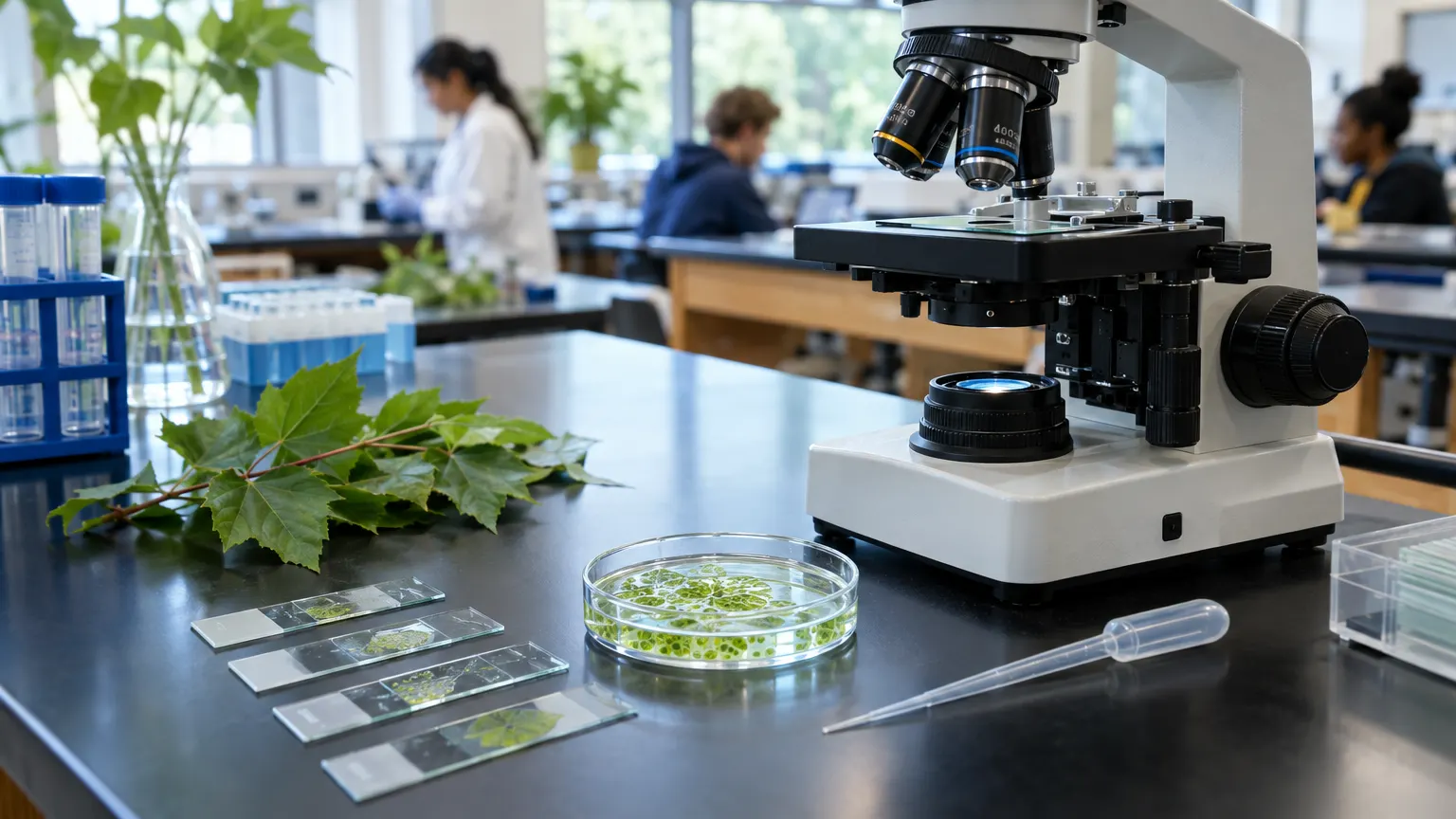

A microscope and specimen slides
AI Level 2
BIO 101 · 4 Credits Fall 2026

Introduction to Biology

Cells, genetics, evolution, and ecology, with a weekly three-hour laboratory.

Portrait of Dr. Martin Osei

Dr. Martin Osei

Professor of Biology; Chair of the Department of Biology

Lecture TTh 9:30–10:45 a.m., Meridian 120; labs weekly

Policy: Permitted with Disclosure for Specified Tasks

AI tools may be used for brainstorming, outlining, and feedback on drafts. All submissions must include an AI disclosure statement.

Chemistry glassware with colored solutions
AI Level 1
CHEM 101 · 4 Credits Fall 2026

General Chemistry I

Atomic structure, bonding, stoichiometry, gases, thermochemistry, and solutions.

Portrait of Dr. Daniel Kim

Dr. Daniel Kim

Associate Professor of Chemistry

Lecture MWF 9:00–9:50 a.m., Meridian 140; labs weekly

Policy: AI Not Permitted for Graded Work

AI may not be used to produce any work submitted for a grade. The course assistant operates strictly as a Socratic conceptual tutor.

A chalkboard with graphs of functions and tangent lines
AI Level 2
MATH 140 · 4 Credits Fall 2026

Calculus I

Limits, derivatives, applications of differentiation, and an introduction to integration.

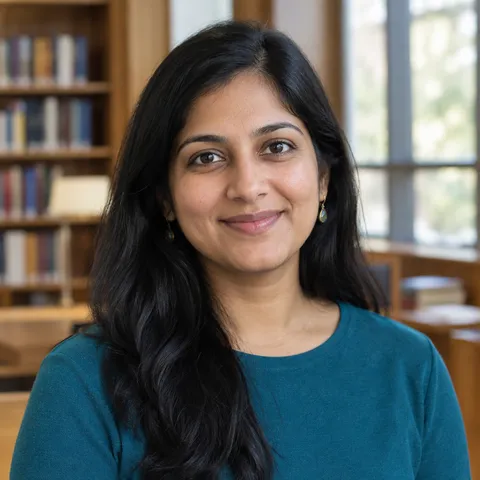
Portrait of Dr. Anika Sharma

Dr. Anika Sharma

Assistant Professor of Mathematics

MTWF 11:00–11:50 a.m., Ashby Hall 105

Policy: Permitted with Disclosure for Specified Tasks

AI tools may be used for brainstorming, outlining, and feedback on drafts. All submissions must include an AI disclosure statement.
Annotated novels and poetry on a desk
AI Level 1
ENGL 210 · 3 Credits Fall 2026

American Literature

American fiction, poetry, and essays from the early republic to the present.

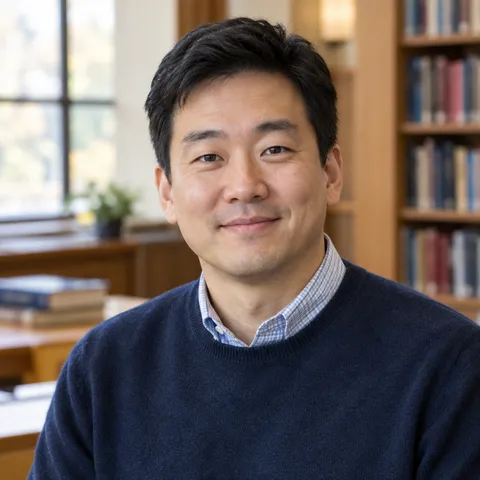
Portrait of Dr. Leila Haddad

Dr. Leila Haddad

Professor of English; Chair of the University Curriculum Committee

TTh 1:00–2:15 p.m., Lovell Hall 305

Policy: AI Not Permitted for Graded Work

AI may not be used to produce any work submitted for a grade. The course assistant operates strictly as a Socratic conceptual tutor.

A laptop with a code editor and handwritten notes
AI Level 3
CS 150 · 4 Credits Fall 2026

Introduction to Programming with Python

Problem solving, data types, control flow, functions, and testing in Python.

Portrait of Dr. Tomás Rivera

Dr. Tomás Rivera

Assistant Professor of Computer Science

MW 2:00–3:15 p.m. + lab F 2:00–3:50 p.m., Ashby Hall 220

Policy: Permitted Broadly with Disclosure

Broad integration into problem solving, debugging, and experimentation. Submissions must document tool usage and prompt strategies.

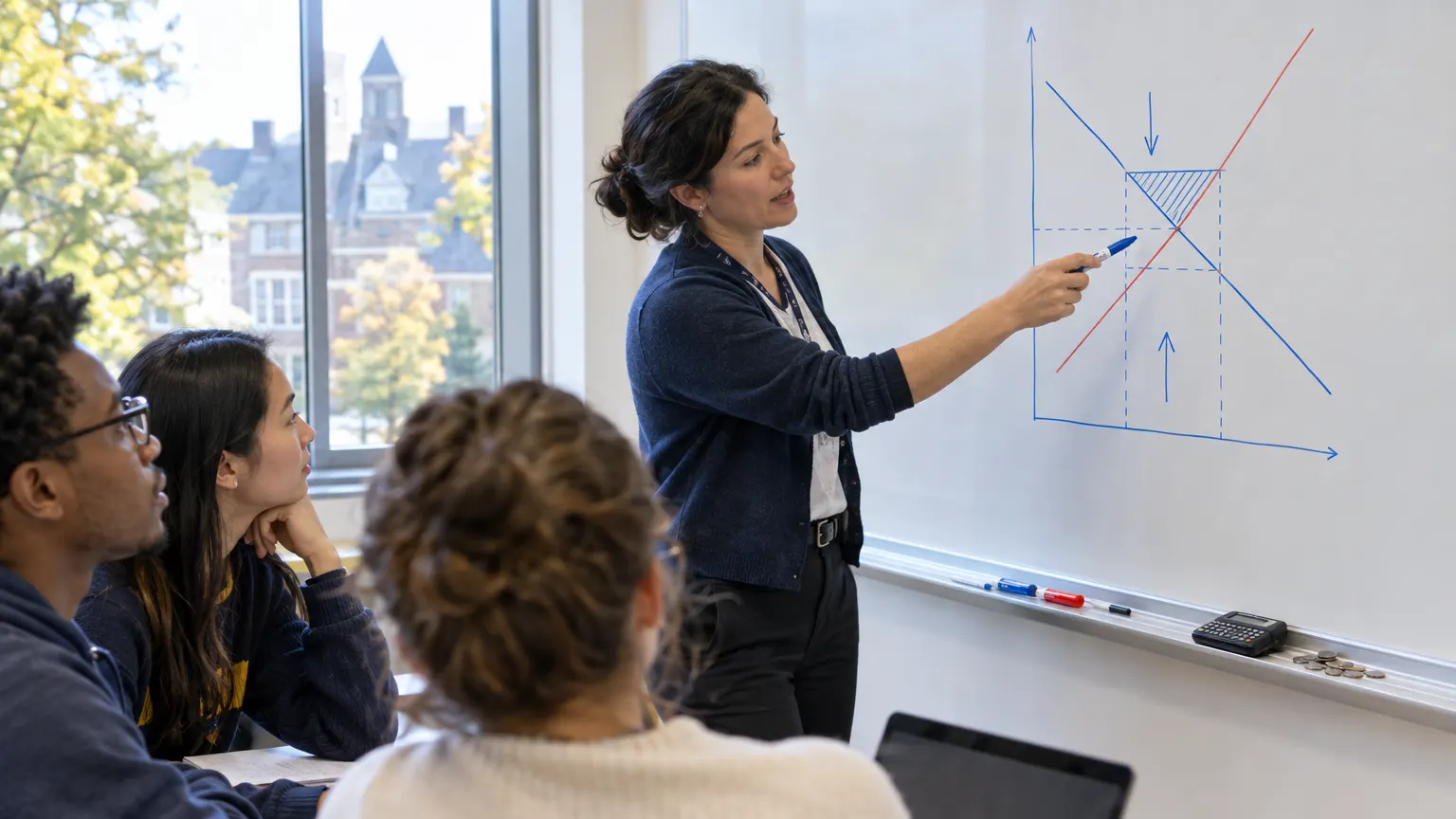
Supply and demand curves on a whiteboard
AI Level 2
ECON 201 · 3 Credits Fall 2026

Principles of Microeconomics

Supply and demand, consumer and firm behavior, market structures, and public policy.

Portrait of Dr. Claire Donovan

Dr. Claire Donovan

Associate Professor of Economics

TTh 11:00 a.m.–12:15 p.m., Tidewell Hall 110

Policy: Permitted with Disclosure for Specified Tasks

AI tools may be used for brainstorming, outlining, and feedback on drafts. All submissions must include an AI disclosure statement.

A stethoscope and an anatomical heart model
AI Level 1
NURS 220 · 3 Credits Fall 2026

Pathophysiology

Mechanisms of disease across body systems, as a foundation for nursing assessment and care.

Portrait of Dr. Janelle Price, RN

Dr. Janelle Price, RN

Clinical Associate Professor of Nursing

MW 8:00–9:15 a.m., Calder 150

Policy: AI Not Permitted for Graded Work

AI may not be used to produce any work submitted for a grade. The course assistant operates strictly as a Socratic conceptual tutor.

Rigorous Governance

Inside the Fall 2026 Evaluation Plan

Empirical Assessment Protocol

In accordance with AI Advisory Council action and the Comprehensive Fall 2026 Pilot Evaluation Plan (AIAC-PLAN-2026-F), the university is gathering empirical evidence across five core dimensions before considering broader adoption:

  • Academic Mastery: Comparing unit exam baselines, midterm grades (due October 16), and course completion rates against three-year historical departmental averages.
  • Engagement Telemetry: Measuring student interaction depth, peak study hours (including late-night sessions when physical tutoring centers are closed), and recurring conceptual stumbling blocks.
  • Instructional Workload: Assessing whether student questions at faculty office hours shift from basic procedural queries to higher-order critical inquiries.
  • Accessibility & Equity: Verifying platform stability for students using assistive technology (conforming to WCAG 2.1 AA) and tracking adoption across commuter and residential student cohorts.
  • Guardrail Integrity: Rigorously auditing that assistants refuse unauthorized assignment assistance in Level 1 and Level 2 courses (target hallucination rate < 1.5%).

Data Privacy & FERPA Guarantees

Student conversations are treated as Confidential Education Records protected under FERPA. The platform operates under a Zero Data Retention (ZDR) agreement: student prompts and faculty course materials are never used to train public commercial AI models.

Participation in the pilot is completely voluntary. Students may choose standard office hours and campus tutoring with zero academic penalty.

Pilot Evaluation Timeline

Baseline Student Survey
Sept 8–15, 2026 (Completed)
Midterm Grade Correlation
Oct 16, 2026
Faculty Pilot Focus Group
Oct 28, 2026
Summative Student Survey
Dec 1–8, 2026
Final Comprehensive Report
Feb 18, 2027

Faculty Policy

What Assistants Will and Won't Do by AI Level

Every syllabus at Alkimi University explicitly designates one of three Generative AI Levels.

AI Level 1

AI Not Permitted for Graded Work

AI may not be used to produce any work submitted for a grade. The course assistant operates strictly as a Socratic conceptual tutor.

What the Assistant Will Do:

  • Explain foundational concepts, definitions, and theories using analogies
  • Offer step-by-step problem-solving hints without revealing final answers
  • Quiz students on course readings, terminology, and core principles
  • Direct students to primary texts in Whitcombe Library and instructor office hours

What the Assistant Will NOT Do:

  • Write essays, lab reports, discussion forum posts, or reading responses
  • Solve homework problem sets or calculate final numeric solutions
  • Generate code or complete coursework submitted for grading
Courses: CHEM 101, ENGL 210, NURS 220
AI Level 2

Permitted with Disclosure for Specified Tasks

AI tools may be used for brainstorming, outlining, and feedback on drafts. All submissions must include an AI disclosure statement.
What the Assistant Will Do:

  • Help brainstorm paper topics and explore research questions
  • Provide constructive feedback on student-authored drafts regarding clarity and organization
  • Generate study flashcards and practice quizzes from lecture notes
  • Walk through math derivations and economic graphs with diagnostic hints

What the Assistant Will NOT Do:

  • Write primary source analyses, draft paragraphs, or generate final essay text
  • Formulate historical arguments or thesis statements on behalf of the student
  • Complete assignments without the mandatory student disclosure statement
Courses: HIST 204, BIO 101, MATH 140, ECON 201
AI Level 3

Permitted Broadly with Disclosure

Broad integration into problem solving, debugging, and experimentation. Submissions must document tool usage and prompt strategies.

What the Assistant Will Do:

  • Explain complex Python tracebacks and assist in iterative debugging
  • Review student-written code for PEP 8 styling, readability, and efficiency
  • Demonstrate alternative algorithmic approaches to computational problems
  • Generate edge-case test suites to evaluate program robustness

What the Assistant Will NOT Do:

  • Produce complete, turnkey programming solutions without student comprehension
  • Bypass individual student mastery of core computational concepts
Courses: CS 150