BIO 101 — Introduction to Biology
4 Credits Fall, Spring
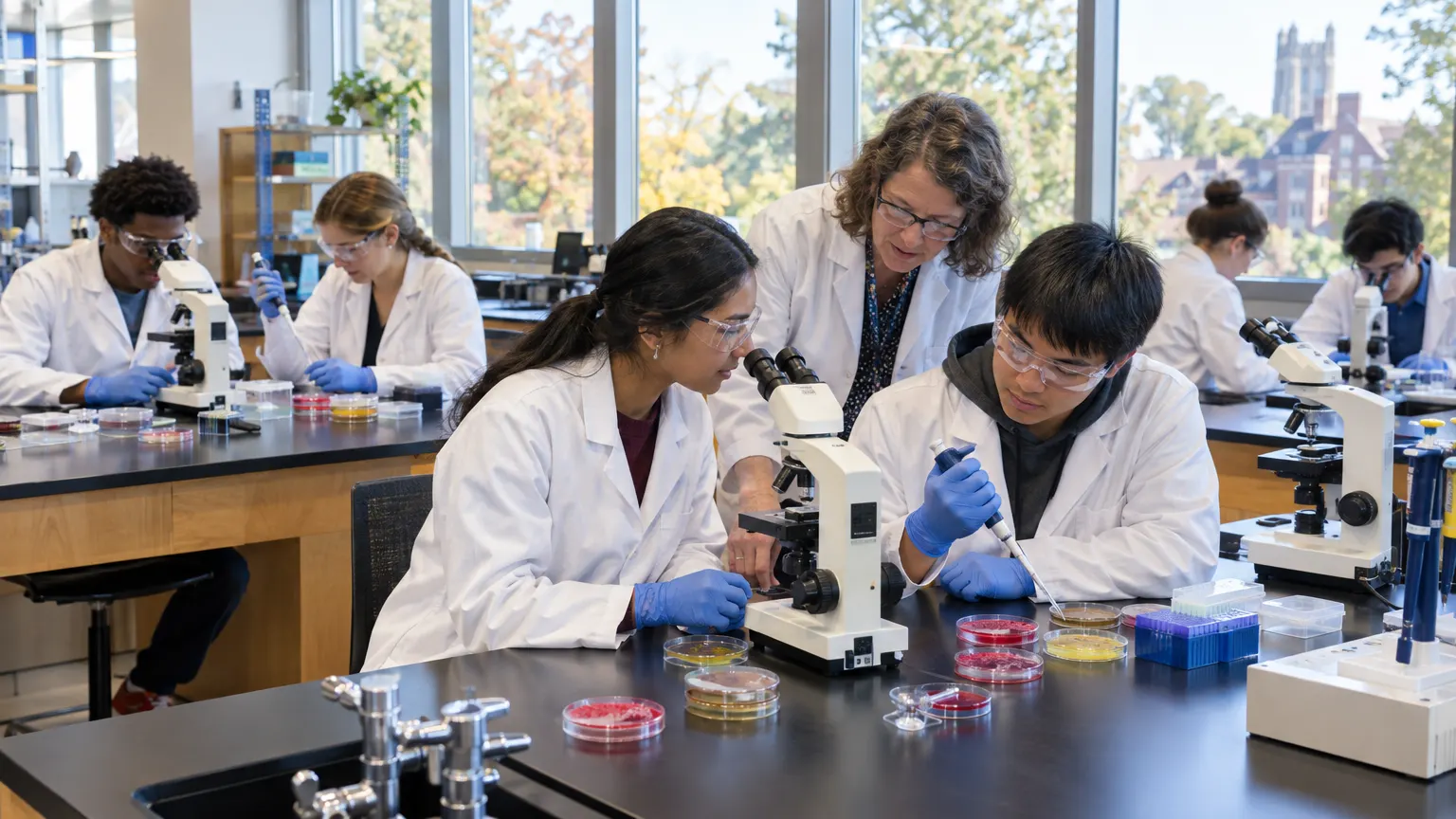
Cells, genetics, evolution, and ecology, with a weekly three-hour laboratory.
- Prerequisites:
- None. High school biology and chemistry recommended.
- Typically Offered:
- Fall, Spring
Subject Code: BIO • Section 9.2
Undergraduate courses offered by the faculty in Biology, supporting major curricula, academic minors, and the Alkimi Core.
Catalog Documentation
Courses in Biology are designed around rigorous empirical, theoretical, and applied principles. Coursework builds systematically from 100-level introductory surveys through 400-level advanced capstones and research seminars.
Prerequisites must be completed with a grade of C- or higher (unless specified otherwise by the academic department). Students who have not satisfied course prerequisites may only enroll with explicit written permission of the instructor and department chair.
Catalog Citation
Official descriptions, credit distributions, and prerequisites authorized by the Faculty Senate.
Subject Summary
Complete Listings
Cells, genetics, evolution, and ecology, with a weekly three-hour laboratory.
Comparative morphology, physiology, and evolutionary adaptations of plants, animals, fungi, and protists, with weekly laboratory dissection and field observations.
Gross and microscopic structural organization and physiology of the human body, covering integumentary, skeletal, muscular, and nervous systems, with anatomical dissection laboratory.
Continuation of BIO 201, covering endocrine, cardiovascular, lymphatic, respiratory, digestive, urinary, and reproductive systems, with physiological measurement laboratory.
Principles of Mendelian inheritance, chromosome structure, DNA replication, transcriptional regulation, recombinant DNA technology, and genomics, with molecular laboratory.
Biochemical mechanisms of cell structure, intracellular trafficking, signal transduction pathways, cell division cycle, and programmed cell death.
Biology of bacteria, viruses, fungi, and pathogenic parasites, host-microbe interactions, antimicrobial therapeutics, and epidemiology, with culture and staining laboratory.
Organismal interactions with abiotic and biotic environments, population demographics, community assembly, nutrient cycling, and macroevolutionary speciation, with ecological field lab.
Cellular components of innate and adaptive immunity, antibody structure, MHC presentation, T-cell activation, immune tolerance, autoimmune diseases, and vaccine development.
Independent experimental or literature research executed under faculty mentorship, culminating in a thesis and formal symposium presentation.