

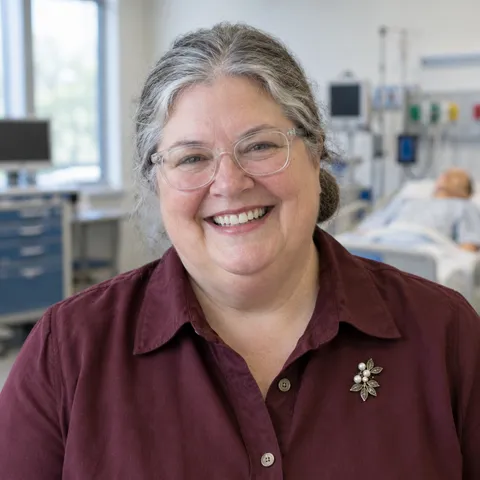
Dr. Paige Stanton
Professor of Public Health
Assigns first-year advisors and approves program changes (Graduate Handbook §4.1, §2.9).
School of Nursing & Health Sciences · Master's degree
The MPH prepares students to protect and improve the health of communities. Students take a core in epidemiology, biostatistics, environmental health, health policy, and social and behavioral health, choose a concentration in epidemiology or health policy and management, and complete an applied practice experience with a public health agency.
MPH · 36 credits
The MPH prepares students to protect and improve the health of communities. Students take a core in epidemiology, biostatistics, environmental health, health policy, and social and behavioral health, choose a concentration in epidemiology or health policy and management, and complete an applied practice experience with a public health agency.
Program requirements, the Graduate Program Director, and tuition for this degree are set out in Graduate Handbook §12.12: Master of Public Health (MPH).
| Requirement | Credits |
|---|---|
| Public health core courses | 15 |
| Epidemiology or health policy and management concentration | 12 |
| Applied practice experience | 3 |
| Integrative capstone project | 6 |
| Total | 36 |
Applied practice experience and an integrative capstone project.
At a glance
Program: Graduate Handbook §12.12 · Time limits: Graduate Handbook §3.5
Graduate Program Director
Professor of Public Health
Assigns first-year advisors and approves program changes (Graduate Handbook §4.1, §2.9).
Department
36 credits
The courses that count toward each part of the MPH curriculum, with the terms each is usually offered.
PUBH 510 Principles of Epidemiology 3 credits Fall
Introduces measures of disease frequency, study designs, bias, and causal reasoning. Students interpret outbreak and surveillance data.
PUBH 520 Biostatistics for Public Health 3 credits Fall
Covers descriptive statistics, confidence intervals, hypothesis tests, and regression using statistical software. Weekly lab sessions apply each method to health datasets.
PUBH 530 Environmental Health 3 credits Fall
Surveys air, water, food, and occupational hazards and the regulations that control them. Students assess exposure risk for a local community.
PUBH 540 Health Policy and Management 3 credits Fall, Spring
Explains how the U.S. health system is financed and governed and how public health agencies are managed. Students analyze a state or federal policy through a case study.
PUBH 545 Social and Behavioral Health 3 credits Spring
Applies theories of health behavior and social determinants to program design. Students critique an intervention and propose improvements.
PUBH 550 Advanced Epidemiologic Methods 3 credits Fall
Covers cohort and case-control analysis, confounding, effect modification, and multivariable models. Students analyze a public-use dataset and report the findings.
PUBH 551 Infectious Disease Epidemiology 3 credits Spring
Examines transmission, outbreak investigation, vaccination, and disease surveillance. Students investigate a historical outbreak from primary records.
PUBH 552 Chronic Disease Epidemiology 3 credits Fall, Spring
Reviews risk factors, screening, and prevention for cardiovascular disease, cancer, and diabetes. Students lead discussions of major cohort studies.
PUBH 560 Health Systems Management 3 credits Fall
Covers organizational structure, human resources, and strategic planning in health agencies and hospitals. Students analyze the management of a public health department.
PUBH 561 Health Economics and Financing 3 credits Spring
Applies economic concepts to insurance markets, provider payment, and cost-effectiveness analysis. Students evaluate the costs and benefits of a public health program.
PUBH 562 Program Planning and Evaluation 3 credits Fall, Spring
Teaches logic models, needs assessment, budgeting, and outcome measurement. Teams plan and evaluate a program for a community partner.
PUBH 590 Applied Practice Experience 3 credits Fall, Spring, Summer
A supervised placement of about 200 hours with a public health agency or community organization. Students complete deliverables set with the site supervisor and a reflection paper.
PUBH 597 Integrative Capstone I 3 credits Fall
Students choose a public health problem, review the evidence, and write the capstone proposal. Small-group meetings give regular feedback.
PUBH 598 Integrative Capstone II 3 credits Spring
Students complete the capstone project, integrating the core and concentration courses and the practice experience. The project ends with a written report and a public presentation.
Sample Roadmap
A representative term-by-term sequence for the MPH. “Elective” is one 3-credit course chosen from the program's elective list above, with your advisor.
Graduate Handbook
Every master's program at Alkimi follows the same Graduate School milestones. Each links to the handbook section that governs it.
Format review and ProQuest submission
Graduate Handbook §5.6: Thesis and Dissertation Format Review and ProQuest Submission
Intent to Graduate and degree audit
Graduate Handbook §11.1: Filing the Intent to Graduate and Degree Audits
Graduate students must keep a cumulative GPA of 3.000 or higher to stay in good standing and to graduate (Graduate Handbook §3.1).
The Graduate Program Director or a designated capstone coordinator is your permanent advisor (Graduate Handbook §4.1).
2026–27
Graduate tuition
$1,450
Per credit hour, plus $300 in mandatory fees per semester. 36 credits come to $52,200 in tuition at 2026–27 rates.
Assistantship stipend
$21,000
9-month stipend for a master's teaching, research, or graduate assistant.
Rates: Graduate Handbook §6.2
Assistantships in this program
Full-time students are considered for graduate assistantships in the department and for research assistantships on faculty grants.
A 20-hour assistantship includes a full tuition waiver of up to 12 credits per semester and covers mandatory fees (Graduate Handbook §6.3).
People
Chair: Dr. Valerie Weiss
Public Health studies the health of communities and populations, and teaches community and population health for nursing students.