
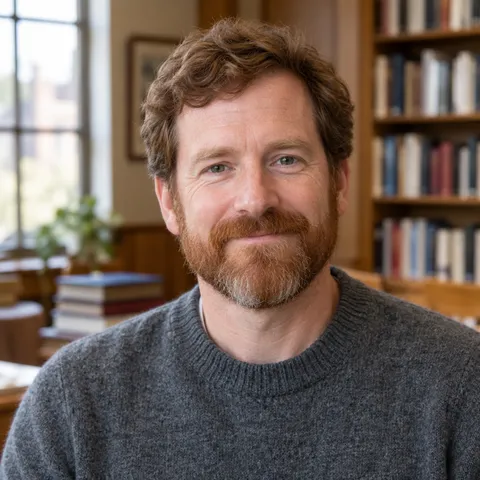
Dr. Brendan Walsh
Associate Professor of Philosophy
Instructor for PHIL 315, Fall 2026
- Office
- Lovell Hall 240
- bwalsh
@university.alkimi.ai
PHIL 315 · Philosophy
The analysis of knowledge, skepticism, justification, foundationalism and coherentism, internalism and externalism, testimony, and social epistemology.
Fall 2026 · At a glance
300-level courses: advanced, upper-division courses requiring prior foundational preparation. Counts toward the 36 upper-division credits every bachelor's degree requires (Undergraduate Catalog §2.3). Details: Undergraduate Catalog §9.15.
Associate Professor of Philosophy
Instructor for PHIL 315, Fall 2026
Questions about a major or your plan: Academic Advising Center, Lovell Hall 101, (555) 555-0158.
Class meetings
Tue & Thu, 9:30–10:45 a.m.
Lovell Hall 320
Final exam
Tuesday, December 15, 2026
8:00–10:00 a.m., Lovell Hall 320
Office hours
Wed & Fri, 10:00–11:30 a.m.
Lovell Hall 240
Thu, 3:00–4:00 p.m.
Virtual (Zoom link in Canvas)
You may use generative AI tools to look up formal definitions of epistemological terminology or check citation formatting for academic philosophy papers. You may not use generative AI to construct philosophical thought experiments, write argument analyses, draft essay paragraphs, or complete examination essays.
From the syllabus
Grading
Letter grades follow the university scale (Student Handbook §4.1).
Key dates
First day of classes Past
Epistemological Argument Analysis Past
Midterm Examination Next
Research Essay: Internalism vs. Externalism
Required materials
Sven Bernecker and Fred Dretske, eds. Knowledge: Readings in Contemporary Epistemology. Oxford University Press, 2000.
Approx. $45 digital rental, $85 print purchase.
Alkimi Contemporary Epistemology Reader and Case Packet.
Free digital access provided on Canvas.
Degree planning
What to take first, what this course opens up, and the requirements it can satisfy, from the Undergraduate Catalog.
No other catalog course lists PHIL 315 as a prerequisite.
Every course also counts toward the 120 credits needed for a bachelor's degree. Confirm your plan with your advisor or the Academic Advising Center.
No AP exam awards credit for PHIL 315 (Undergraduate Catalog §3.11).
Registration
PHIL 315 is offered in the fall semester. Register through AlkimiHub self-service registration, which opens by credit standing. Until the add deadline, you don't need instructor permission as long as seats remain and you've met the prerequisites. Details: Student Handbook §3.3.
When a seat opens, AlkimiHub offers it to the first student on the waitlist and emails you. You have 24 hours to claim it before it goes to the next student. Details: Student Handbook §3.10.
Fall 2026 withdrawal deadline
Last day to withdraw with a W or elect Pass/No Pass.
Fall 2027 registration opens
By credit standing, in AlkimiHub.
The Fall 2026 add deadline passed on Sep 2, 2026.
All dates: academic calendar. Registration help: Office of the Registrar.
Official course syllabus
The syllabus as filed with the department and posted in Canvas for Fall 2026.
Term: Fall 2026
Credits: 3.0
Lecture Times & Location: Tuesday & Thursday 9:30–10:45 a.m., Lovell Hall 320
Modality: In-Person
bwalsh@university.alkimi.ai
The analysis of knowledge, skepticism, justification, foundationalism and coherentism, internalism and externalism, testimony, and social epistemology. PHIL 315 provides an advanced, rigorous examination of central problems in contemporary epistemology and the theory of knowledge. Students investigate the analysis of propositional knowledge, the nature of epistemic justification, and radical skeptical paradoxes. The course contrasts classical internalist foundationalism and coherentism with externalist paradigms including process reliabilism, proper functionalism, and virtue epistemology. Later units explore social and applied epistemology, focusing on the epistemic status of testimony, peer disagreement, epistemic injustice, and the social structures of inquiry.
PHIL 205 and PHIL 220.
Upon successful completion of PHIL 315, students will be able to:
In accordance with Alkimi University Academic Policies (Student Handbook §5.8), PHIL 315 operates under AI Level 1.
| Week | Dates | Topics & Readings | Assignments & Deadlines |
|---|---|---|---|
| Week 1 | Aug 27 | The Concept of Knowledge and Tripartite Definition: The concept of knowledge, propositional vs. acquaintance knowledge, epistemic luck, and the traditional tripartite definition (Justified True Belief). Reading: Bernecker & Dretske, Introduction and Ch. 1 | First day of classes: Wed Aug 26. |
| Week 2 | Sep 1, 3 | The Gettier Problem and Post-Gettier Proposals: Gettier's challenge to the tripartite account; no false lemmas, defeasibility accounts (Lehrer and Paxson), and epistemic anti-luck conditions. Reading: Bernecker & Dretske, Ch. 2–4 (Gettier, Lehrer) | Wed Sep 2: Add/section change deadline. |
| Week 3 | Sep 8, 10 | Causal Theories and Truth-Tracking Sensitivity: Causal theories of knowledge (Alvin Goldman) and truth-tracking conditional theories (Robert Nozick's sensitivity condition). Reading: Bernecker & Dretske, Ch. 5–7 (Goldman, Nozick) | Mon Sep 7: Labor Day (no classes). Wed Sep 9: Census date (last day to drop without a W). |
| Week 4 | Sep 15, 17 | Safety, Anti-Luck Epistemology, and Virtue Epistemology: Safety conditions for knowledge (Ernest Sosa, Duncan Pritchard) and agent-based virtue epistemology (competence, apt belief). Reading: Bernecker & Dretske, Ch. 8–9 (Sosa, Pritchard) | — |
| Week 5 | Sep 22, 24 | The Structure of Justification: Foundationalism and Paper 1: The regress problem, Agrippa's Trilemma, classical foundationalism, basic beliefs, and Cartesian infallibilism; Paper 1 due Friday. Reading: Bernecker & Dretske, Ch. 10–12 (Chisholm) | Epistemological Argument Analysis due Fri Sep 25 at 11:59 p.m. |
| Week 6 | Sep 29, Oct 1 | Coherentism, Infinitism, and Midterm Examination: Coherentism: holistic justification, mutual support, Laurence BonJour's critique of foundationalism; Midterm Examination in class. Reading: Bernecker & Dretske, Ch. 13–15 (BonJour) and Review | Midterm Examination (in class). |
| Week 7 | Oct 6, 8 | Internalism: Evidentialism and Epistemic Access: Internalism: access internalism, mentalism, and evidentialism; Richard Feldman and Earl Conee's defense of internalist justification. Reading: Bernecker & Dretske, Ch. 16–17 (Feldman & Conee) | — |
| Week 8 | Oct 15 | Externalism: Process Reliabilism and Proper Function (Fall Break Week): Externalism: process reliabilism, Goldman's reliabilist account, proper functionalism (Alvin Plantinga) (Fall Break week). Reading: Bernecker & Dretske, Ch. 18–19 (Goldman, Plantinga) | Oct 12–Oct 13: Fall break (no classes). |
| Week 9 | Oct 20, 22 | Radical Skepticism, Epistemic Closure, and Mooreanism: Radical skepticism, brain-in-a-vat scenarios, the Epistemic Closure Principle, and G.E. Moore's common-sense dogmatic reply. Reading: Bernecker & Dretske, Ch. 20–22 (Moore, Stroud) | — |
| Week 10 | Oct 27, 29 | Epistemic Contextualism and Invariantism: Epistemic contextualism (Keith DeRose, David Lewis), indexicality of 'knows', and subject-sensitive invariantism (John Hawthorne, Jason Stanley). Reading: Bernecker & Dretske, Ch. 23–25 (DeRose, Lewis) | — |
| Week 11 | Nov 3, 5 | Epistemology of Perception and Phenomenal Conservatism: The epistemology of perception: direct realism, indirect representationalism, phenomenal conservatism (Michael Huemer), and cognitive penetrability. Reading: Bernecker & Dretske, Ch. 26–27 (Huemer) | Fri Nov 6: Last day to withdraw (W) or elect Pass/No Pass. |
| Week 12 | Nov 10, 12 | The Epistemology of Testimony: The epistemology of testimony: Humean reductionism vs. Reidian non-reductionism (C.A.J. Coady, Elizabeth Fricker); transmission of warrant. Reading: Bernecker & Dretske, Ch. 28–29 (Coady, Fricker) | — |
| Week 13 | Nov 17, 19 | Peer Disagreement and Epistemic Humility: Epistemology of disagreement: peer disagreement, conciliationism (David Christensen), steadfast views (Thomas Kelly); Research Essay due Friday. Reading: Reader articles on Disagreement | Research Essay: Internalism vs. Externalism due Fri Nov 20 at 11:59 p.m. |
| Week 14 | Nov 24 | Epistemic Injustice and Social Epistemology (Thanksgiving Week): Social epistemology: Miranda Fricker on epistemic injustice (testimonial and hermeneutical injustice) (Thanksgiving week). Reading: Reader articles on Epistemic Injustice | Nov 25–Nov 27: Thanksgiving break (no classes). |
| Week 15 | Dec 1, 3 | Epistemic Networks, Echo Chambers, and Group Belief: Epistemic bubbles, echo chambers, conspiracy theories, and online polarization in contemporary epistemic environments. Reading: Reader articles on Echo Chambers | — |
| Week 16 | Dec 8 | Pragmatic Encroachment and Epistemology Synthesis: Pragmatic encroachment on knowledge, synthesis of internalist and externalist insights, and comprehensive final review. Reading: Synthesis readings and Review | Wed Dec 9: Last day of classes. Thu Dec 10: Reading Day. |
| Finals | Dec 15 | Comprehensive Final Examination: Tuesday, December 15, 2026, 8:00–10:00 a.m., Lovell Hall 320. | Scheduled during the university final examination period in Lovell Hall 320. |
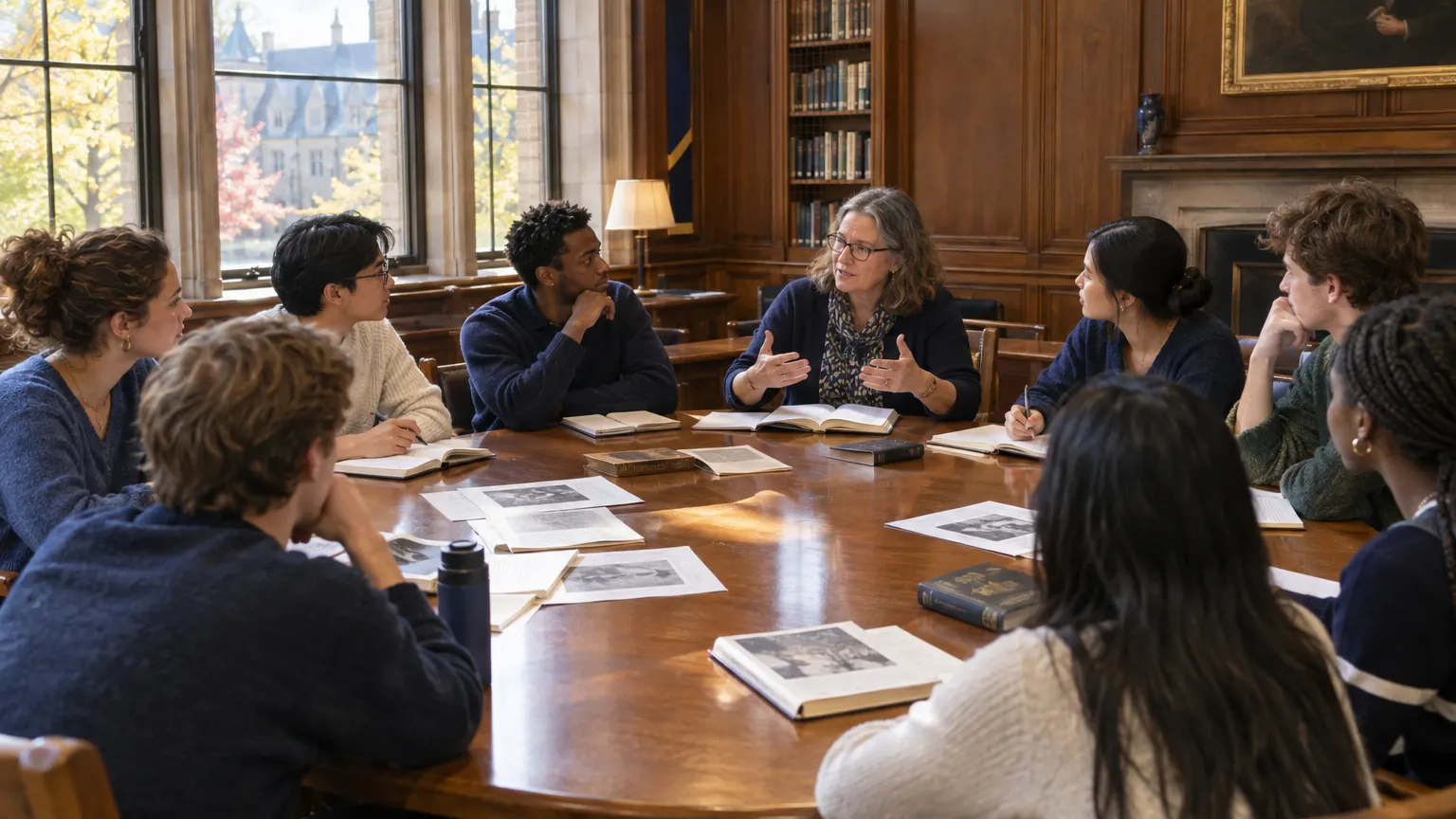
Advanced seminar discussion in Lovell Hall 320 requires consistent, punctual attendance and deep engagement with primary texts. Up to two unexcused absences are permitted without penalty. Further unexcused absences reduce the final grade by one-third of a letter grade per occurrence. Missing more than five class sessions results in a failing grade. Students who miss the first two class meetings without notifying the instructor may be dropped. Students may miss class for religious observance without penalty if they notify the instructor in writing within the first two weeks of the semester (by Wednesday, September 9, 2026). Absences for university-sponsored activities (athletics, performances, conferences) are excused with a letter from the sponsoring office at least one week in advance.
Formal essays submitted late lose one-third of a letter grade per calendar day overdue and will not be accepted after four days past the deadline. Weekly reading critiques must be submitted on time to inform the seminar discussion.
The final examination (Tuesday, December 15, 2026, 8:00–10:00 a.m.) is scheduled by the University Registrar and can't be moved without the Dean's written approval (Faculty Handbook §5.5). A student with three or more final exams on the same calendar day may reschedule one of them. Requests go to the instructor of the middle exam by the last day of classes. For this term, send the request by Wednesday, December 9, 2026 (Student Handbook §6.4).
Alkimi University is an academic community devoted to rigorous scholarship, open intellectual inquiry, and uncompromising ethical conduct. All students are subject to the regulations of the Alkimi University Academic Integrity Policy. Academic dishonesty—including plagiarism, cheating on examinations, unauthorized collaboration, fabrication of empirical data, and unauthorized submission of academic work generated by artificial intelligence—undermines the integrity of the university and carries severe disciplinary sanctions. Sanctions range from a failing grade on an assignment or exam to an administrative course failure recorded as an 'XF' on the official transcript, academic suspension, or expulsion. Suspected violations are formally investigated and resolved through the Office of Academic Integrity in accordance with Faculty Handbook §6. For detailed information, consult the Office of Academic Integrity, Lovell Hall 315, (555) 555-0163, integrity@university.alkimi.ai.
Alkimi University is committed to providing equitable educational access and reasonable accommodations for all students with documented disabilities, including physical, sensory, psychological, learning, and chronic health conditions. Students requesting academic accommodations must formally register with the Office of Accessibility Services, Harlan Hall 204, (555) 555-0155, access@university.alkimi.ai. Once approved, students will receive an official Faculty Accommodation Letter detailing approved accommodations. Students should present this letter to the instructor as early in the semester as possible, and at least one week prior to any exam or assignment requiring accommodation. Accommodations cannot be applied retroactively.
Your physical health, psychological well-being, and mental health are essential to your academic success. If you experience heightened stress, anxiety, depressive symptoms, personal trauma, or academic burnout, free, confidential counseling and medical care are available through the Hollis Health & Counseling Center, located in the Hollis Center. Routine appointments are available Monday–Friday 8:00 a.m.–6:00 p.m. and Saturday 10:00 a.m.–2:00 p.m. during the semester by calling (555) 555-0190 or emailing health@university.alkimi.ai. Urgent, 24/7 crisis psychological counseling is accessible immediately at (555) 555-0199.
advising@university.alkimi.ai
askalibrarian@university.alkimi.ai
health@university.alkimi.ai
PHIL courses