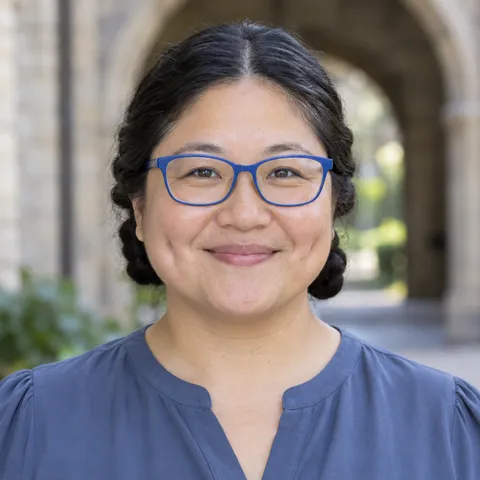
Dr. Keiko Tanaka
Assistant Teaching Professor of Environmental Science
Instructor for ENVS 101, Fall 2026
- Office
- Meridian Science Center 416
- ktanaka
@university.alkimi.ai
ENVS 101 · Environmental Science
Earth systems, biogeochemical cycles, biodiversity, population, energy, pollution, and climate change, with a weekly three-hour laboratory including field trips to the Merrow River watershed.
Fall 2026 · At a glance
100-level courses: introductory, lower-division courses primarily for first-year students. Details: Undergraduate Catalog §9.18.
Assistant Teaching Professor of Environmental Science
Instructor for ENVS 101, Fall 2026
Questions about a major or your plan: Academic Advising Center, Lovell Hall 101, (555) 555-0158.
Class meetings
Lecture
Mon, Wed, Fri, 11:00–11:50 a.m.
Meridian Science Center 160
Lab
Tue, 1:00–3:50 p.m.
Meridian Science Center 132
Final exam
Tuesday, December 15, 2026
10:30 a.m.–12:30 p.m., Meridian Science Center 160
Office hours
Mon & Thu, 9:00–10:30 a.m.
Meridian Science Center 416
Fri, 9:00–10:00 a.m.
Virtual (Zoom link in Canvas)
You may use Alkimi or other approved AI tools to brainstorm field study hypotheses, generate practice comprehension questions on biogeochemical cycles, and refine the grammar and readability of your draft laboratory reports. You may not use AI tools to fabricate or alter environmental field data, write complete laboratory discussion sections, draft reading summary responses, or access generative platforms during examinations.
From the syllabus
Grading
Letter grades follow the university scale (Student Handbook §4.1).
Key dates
First day of classes Past
Midterm Exam 1 Past
Midterm Exam 2 Next
Merrow River Watershed Project
Required materials
Withgott, Jay, and Matthew Laposata. Environment: The Science Behind the Stories. 7th ed., Pearson, 2021.
Approx. $60 for digital access; approx. $125 for print purchase.
ENVS 101 Environmental Science Laboratory Manual and Field Guide (Fall 2026). Alkimi University Copy Center.
Approx. $20.
Field notebook, waterproof pen, and rubber boots or sturdy waterproof footwear for Merrow River field trips.
Approx. $30.
Degree planning
What to take first, what this course opens up, and the requirements it can satisfy, from the Undergraduate Catalog.
No catalog course is required first.
Catalog wording: None.
Every course also counts toward the 120 credits needed for a bachelor's degree. Confirm your plan with your advisor or the Academic Advising Center.
No AP exam awards credit for ENVS 101 (Undergraduate Catalog §3.11).
Registration
None.
ENVS 101 is offered in the fall semester. Register through AlkimiHub self-service registration, which opens by credit standing. Until the add deadline, you don't need instructor permission as long as seats remain and you've met the prerequisites. Details: Student Handbook §3.3.
When a seat opens, AlkimiHub offers it to the first student on the waitlist and emails you. You have 24 hours to claim it before it goes to the next student. Details: Student Handbook §3.10.
Fall 2026 withdrawal deadline
Last day to withdraw with a W or elect Pass/No Pass.
Fall 2027 registration opens
By credit standing, in AlkimiHub.
The Fall 2026 add deadline passed on Sep 2, 2026.
All dates: academic calendar. Registration help: Office of the Registrar.
Official course syllabus
The syllabus as filed with the department and posted in Canvas for Fall 2026.
Term: Fall 2026
Credits: 4.0
Lecture Times & Location: Monday, Wednesday, Friday 11:00–11:50 a.m., Meridian Science Center 160
Laboratory Time & Location: Tuesday 1:00–3:50 p.m., Meridian Science Center 132
Modality: In-Person Lecture and Laboratory
ktanaka@university.alkimi.ai
Earth systems, biogeochemical cycles, biodiversity, population, energy, pollution, and climate change, with a weekly three-hour laboratory including field trips to the Merrow River watershed. ENVS 101 introduces students to the interdisciplinary study of the Earth system, environmental sustainability, and human ecological impacts. Through systems-thinking frameworks, we analyze the structure of the lithosphere, atmosphere, hydrosphere, and biosphere, tracking global biogeochemical cycles and energy flows. The course examines human population dynamics, agriculture and food systems, renewable and fossil energy resources, biodiversity loss, air and water pollution, and global climate change. Through weekly field and analytical laboratories, including hands-on sampling in the Merrow River watershed, you will learn environmental monitoring, water quality testing, ecological surveying, and environmental risk assessment.
None.
Upon successful completion of ENVS 101, students will be able to:
In accordance with Alkimi University Academic Policies (Student Handbook §5.8), ENVS 101 operates under AI Level 2.
| Week | Dates | Topics & Readings | Laboratory | Assignments & Deadlines |
|---|---|---|---|---|
| Week 1 | Aug 26, 28 | Science, Sustainability, and the Global Environment: Environmental science methodologies, the scientific method, ecological footprints, planetary boundaries, and concepts of sustainability. Reading: Withgott Ch. 1 | No lab meetings this week. | First day of classes: Wed Aug 26. |
| Week 2 | Aug 31–Sep 4 | Earth Systems, Matter, and Biogeochemical Cycles: Atomic structure, macromolecular chemistry, energy forms, photosynthesis, cellular respiration, and the carbon, nitrogen, and phosphorus cycles. Reading: Withgott Ch. 2 | Lab 1: Campus Environmental Audit and GPS Field Navigation. | Wed Sep 2: Add/section change deadline. |
| Week 3 | Sep 9, 11 | Evolution, Biodiversity, and Population Ecology: Natural selection, speciation, phylogenetic trees, population growth models (exponential and logistic), and carrying capacity. Reading: Withgott Ch. 3 | Lab 2: Merrow River Watershed Introduction and Riparian Habitat Assessment. | Mon Sep 7: Labor Day (no classes). Wed Sep 9: Census date (last day to drop without a W). |
| Week 4 | Sep 14–18 | Species Interactions and Community Ecology: Competition, predation, parasitism, mutualism, trophic levels, food webs, ecological succession, and invasive species impacts. Reading: Withgott Ch. 4 | Lab 3: Benthic Macroinvertebrate Bioassessment in the Merrow River. | — |
| Week 5 | Sep 21–25 | Biomes, Ecosystems, and Landscape Ecology & Midterm Exam 1: Terrestrial and aquatic biomes, ecosystem services, landscape fragmentation, and ecological restoration; Midterm Exam 1 in class. Reading: Withgott Ch. 5 | Lab 4: Stream Hydrology, Velocity Profiles, and Discharge Calculations. | Midterm Exam 1 (in class). |
| Week 6 | Sep 28–Oct 2 | Human Population Dynamics and Demography: Global demographic trends, age-structure pyramids, total fertility rates, demographic transition model, and resource consumption. Reading: Withgott Ch. 6 | Lab 5: Demographic Transition Modeling and Age-Structure Analysis. | — |
| Week 7 | Oct 5–9 | Soil Systems and Sustainable Agriculture: Soil horizons, weathering, soil conservation practices, industrial agriculture, green revolution, GMOs, and organic farming. Reading: Withgott Ch. 7 & 9 | Lab 6: Agricultural Soil Quality, Texture, and Nutrient Testing. | — |
| Week 8 | Oct 14, 16 | Environmental Health and Toxicology: Toxicology types, bioaccumulation, biomagnification, dose-response curves, endocrine disruptors, and chemical risk assessment. Reading: Withgott Ch. 8 | No lab meetings this week (holiday). | Oct 12–Oct 13: Fall break (no classes). Fri Oct 16: Midterm grades due. |
| Week 9 | Oct 19–23 | Freshwater Resources and Watershed Hydrology: Surface water hydrology, groundwater aquifers, water scarcity, dam impacts, and watershed protection strategies. Reading: Withgott Ch. 12 | Lab 7: Physical and Chemical Water Quality Testing: Dissolved Oxygen, pH, and Nutrients. | — |
| Week 10 | Oct 26–30 | Ocean Ecosystems and Marine Conservation & Midterm Exam 2: Ocean circulation, coastal zones, coral reef degradation, marine plastic pollution, and marine protected areas; Midterm Exam 2 in class. Reading: Withgott Ch. 13 | Lab 8: Coliform Bacteria and Microbial Water Contamination Assays. | Midterm Exam 2 (in class). |
| Week 11 | Nov 2–6 | Atmospheric Science and Air Pollution: Atmospheric composition, thermal inversions, primary and secondary criteria air pollutants, acid deposition, and ozone layer recovery. Reading: Withgott Ch. 14 | Lab 9: Ambient Particulate Matter (PM2.5/PM10) and Urban Air Quality Monitoring. | Fri Nov 6: Last day to withdraw (W) or elect Pass/No Pass. |
| Week 12 | Nov 9–13 | Global Climate Change Science and Impacts: Milankovitch cycles, greenhouse gases, paleoclimate proxies, IPCC climate models, ice sheet dynamics, and sea level rise. Reading: Withgott Ch. 15 | Lab 10: Greenhouse Gas Modeling and Radiative Forcing Simulations. | — |
| Week 13 | Nov 16–20 | Fossil Fuels and Nuclear Energy: Coal, petroleum, and natural gas extraction, carbon emissions, peak oil, nuclear fission, radioactive waste, and reactor safety. Reading: Withgott Ch. 16 | Lab 11: Campus Energy Audit and Thermal Imaging Analysis. | Merrow River Watershed Project due Fri Nov 20 at 11:59 p.m. |
| Week 14 | Nov 23 | Renewable Energy and Clean Technology: Solar photovoltaics and concentrated solar, wind power, hydroelectricity, geothermal, biofuels, and power grid modernization. Reading: Withgott Ch. 17 | Lab 12: Photovoltaic Cell Efficiency and Wind Power Siting. | Nov 25–Nov 27: Thanksgiving break (no classes). |
| Week 15 | Nov 30–Dec 4 | Waste Management and the Circular Economy: Municipal solid waste, landfill engineering, incineration, hazardous waste disposal, recycling economics, and lifecycle analysis. Reading: Withgott Ch. 18 | Lab 13: Municipal Solid Waste Audit and Lifecycle Assessment. | — |
| Week 16 | Dec 7, 9 | Urbanization, Policy, and Sustainable Futures: Urban sprawl, smart growth, environmental law (NEPA, Clean Water Act, Clean Air Act), environmental economics, and review. Reading: Withgott Ch. 19 & Review | Lab 14: Merrow River Watershed Synthesis and Project Presentations. | Wed Dec 9: Last day of classes. Thu Dec 10: Reading Day. |
| Finals | Dec 15 | Final Comprehensive Examination: Tuesday, December 15, 2026, 10:30 a.m.–12:30 p.m., Meridian Science Center 160. | — | Comprehensive examination covering Earth systems, ecology, pollution, energy, and climate science. |
Active attendance at all Monday, Wednesday, and Friday lectures and Tuesday laboratory meetings is required. Field trips to the Merrow River watershed depart promptly from Meridian Science Center; students arriving late will miss transport and receive a zero for that lab. Notify Dr. Tanaka at least 24 hours prior to an excused absence. More than two unexcused lab absences results in an automatic grade of F. Students who miss the first two class meetings without notifying the instructor may be dropped. Students may miss class for religious observance without penalty if they notify the instructor in writing within the first two weeks of the semester (by Wednesday, September 9, 2026). Absences for university-sponsored activities (athletics, performances, conferences) are excused with a letter from the sponsoring office at least one week in advance.
Laboratory reports lose 10% per day late and cannot be submitted more than three days past the Tuesday deadline. Weekly online reading quizzes close strictly at 11:59 p.m. with no extensions permitted, but the lowest two quiz scores are dropped automatically at the end of the semester.
Laboratory sessions frequently involve outdoor field work along the Merrow River watershed regardless of light rain or cold. Students must wear closed-toe sturdy shoes or rubber boots, full-length pants, and weather-appropriate outerwear. Safety vests and sampling gear will be provided. Always follow field safety guidelines provided by the instructor.
The final examination (Tuesday, December 15, 2026, 10:30 a.m.–12:30 p.m.) is scheduled by the University Registrar and can't be moved without the Dean's written approval (Faculty Handbook §5.5). A student with three or more final exams on the same calendar day may reschedule one of them. Requests go to the instructor of the middle exam by the last day of classes. For this term, send the request by Wednesday, December 9, 2026 (Student Handbook §6.4).
Alkimi University is an academic community devoted to rigorous scholarship, open intellectual inquiry, and uncompromising ethical conduct. All students are subject to the regulations of the Alkimi University Academic Integrity Policy. Academic dishonesty—including plagiarism, cheating on examinations, unauthorized collaboration, fabrication of empirical data, and unauthorized submission of academic work generated by artificial intelligence—undermines the integrity of the university and carries severe disciplinary sanctions. Sanctions range from a failing grade on an assignment or exam to an administrative course failure recorded as an 'XF' on the official transcript, academic suspension, or expulsion. Suspected violations are formally investigated and resolved through the Office of Academic Integrity in accordance with Faculty Handbook §6. For detailed information, consult the Office of Academic Integrity, Lovell Hall 315, (555) 555-0163, integrity@university.alkimi.ai.
Alkimi University is committed to providing equitable educational access and reasonable accommodations for all students with documented disabilities, including physical, sensory, psychological, learning, and chronic health conditions. Students requesting academic accommodations must formally register with the Office of Accessibility Services, Harlan Hall 204, (555) 555-0155, access@university.alkimi.ai. Once approved, students will receive an official Faculty Accommodation Letter detailing approved accommodations. Students should present this letter to the instructor as early in the semester as possible, and at least one week prior to any exam or assignment requiring accommodation. Accommodations cannot be applied retroactively.
Your physical health, psychological well-being, and mental health are essential to your academic success. If you experience heightened stress, anxiety, depressive symptoms, personal trauma, or academic burnout, free, confidential counseling and medical care are available through the Hollis Health & Counseling Center, located in the Hollis Center. Routine appointments are available Monday–Friday 8:00 a.m.–6:00 p.m. and Saturday 10:00 a.m.–2:00 p.m. during the semester by calling (555) 555-0190 or emailing health@university.alkimi.ai. Urgent, 24/7 crisis psychological counseling is accessible immediately at (555) 555-0199.
advising@university.alkimi.ai
askalibrarian@university.alkimi.ai
health@university.alkimi.ai
ENVS courses