

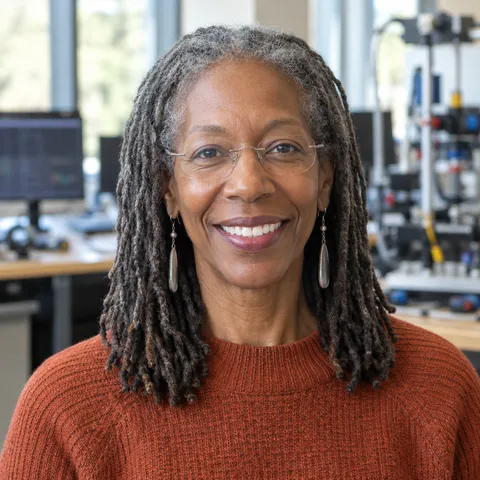
Dr. Gwendolyn Staton
Professor of Data Science
Assigns first-year advisors and approves program changes (Graduate Handbook §4.1, §2.9).
School of Engineering & Computing · Master's degree
The MS in Data Science combines statistical modeling, machine learning, and data engineering. Faculty from Computer Science and Statistics teach the curriculum, which ends in a capstone project analyzing real data with a partner organization.
MS · 33 credits
The MS in Data Science combines statistical modeling, machine learning, and data engineering. Faculty from Computer Science and Statistics teach the curriculum, which ends in a capstone project analyzing real data with a partner organization.
Program requirements, the Graduate Program Director, and tuition for this degree are set out in Graduate Handbook §12.8: Master of Science in Data Science (MS).
| Requirement | Credits |
|---|---|
| Core courses: statistical learning, machine learning, data engineering, data visualization, and data ethics | 18 |
| Electives | 9 |
| Capstone project | 6 |
| Total | 33 |
Capstone project with an industry, government, or research partner, presented in the final semester.
At a glance
Program: Graduate Handbook §12.8 · Time limits: Graduate Handbook §3.5
Graduate Program Director
Professor of Data Science
Assigns first-year advisors and approves program changes (Graduate Handbook §4.1, §2.9).
Departments
33 credits
The courses that count toward each part of the MS curriculum, with the terms each is usually offered.
STAT 510 Probability and Statistical Inference 3 credits Fall
Covers probability theory, estimation, hypothesis testing, and linear models. Students use R to fit and diagnose models on real data.
STAT 520 Statistical Learning 3 credits Fall
Covers regression, classification, resampling, and regularization from a statistical viewpoint. Assignments compare methods by prediction error and interpretability.
CS 560 Machine Learning 3 credits Fall, Spring
Covers supervised and unsupervised learning, model selection, regularization, and evaluation. Students train and tune models in Python on real datasets.
DATA 510 Data Engineering 3 credits Fall
Covers data pipelines, warehousing, and workflow orchestration. In a weekly computing lab students ingest, clean, and store data from several sources.
DATA 520 Data Visualization 3 credits Spring
Covers perceptual principles, chart design, and interactive dashboards. Students build visualizations in the weekly computing lab and present them for critique.
DATA 530 Data Ethics and Governance 3 credits Summer
Discusses privacy, bias, consent, and accountability in the collection and use of data. Students analyze case studies and draft governance policies.
STAT 530 Bayesian Data Analysis 3 credits Spring
Covers prior and posterior reasoning, hierarchical models, and Markov chain Monte Carlo. Students fit Bayesian models to applied problems and report their uncertainty.
STAT 540 Time Series and Forecasting 3 credits Fall, Spring
Covers autocorrelation, ARIMA models, seasonality, and forecast evaluation. Students build forecasts for economic and sensor data.
DATA 540 Large-Scale Data Processing 3 credits Fall
Covers distributed storage and parallel processing frameworks for datasets too large for one machine. Students write and tune jobs on a shared cluster.
CS 570 Natural Language Processing 3 credits Spring
Covers tokenization, language models, parsing, and text classification. Students build a working text-analysis system from raw corpora.
CS 580 Deep Learning 3 credits Spring
Covers neural network architectures, optimization, and training at scale. A weekly computing lab has students train convolutional and sequence models on GPU nodes.
CS 585 Computer Vision 3 credits Fall
Covers image formation, feature detection, object recognition, and video analysis. Assignments apply both classical methods and learned models to image data.
DATA 598 Data Science Capstone 6 credits Fall, Spring, Summer
Student teams analyze real data for an industry, government, or research partner. Each team presents its findings and a written report in the final semester.
Sample Roadmap
A representative term-by-term sequence for the MS. “Elective” is one 3-credit course chosen from the program's elective list above, with your advisor.
Graduate Handbook
Every master's program at Alkimi follows the same Graduate School milestones. Each links to the handbook section that governs it.
Format review and ProQuest submission
Graduate Handbook §5.6: Thesis and Dissertation Format Review and ProQuest Submission
Intent to Graduate and degree audit
Graduate Handbook §11.1: Filing the Intent to Graduate and Degree Audits
Graduate students must keep a cumulative GPA of 3.000 or higher to stay in good standing and to graduate (Graduate Handbook §3.1).
The Graduate Program Director or a designated capstone coordinator is your permanent advisor (Graduate Handbook §4.1).
2026–27
Graduate tuition
$1,450
Per credit hour, plus $300 in mandatory fees per semester. 33 credits come to $47,850 in tuition at 2026–27 rates.
Assistantship stipend
$21,000
9-month stipend for a master's teaching, research, or graduate assistant.
Rates: Graduate Handbook §6.2
Assistantships in this program
Full-time students are considered for teaching assistantships in the introductory data science courses.
A 20-hour assistantship includes a full tuition waiver of up to 12 credits per semester and covers mandatory fees (Graduate Handbook §6.3).
People
Chair: Dr. Olumide Olatunji
Computer Science teaches programming, algorithms, systems, and artificial intelligence, and houses the Data Science program with faculty from Statistics and Mathematics and the interdisciplinary AI & Society minor.
Chair: Dr. Catherine Strand
Statistics teaches data analysis and probability to students across the university and shares faculty and courses with the Data Science program.