
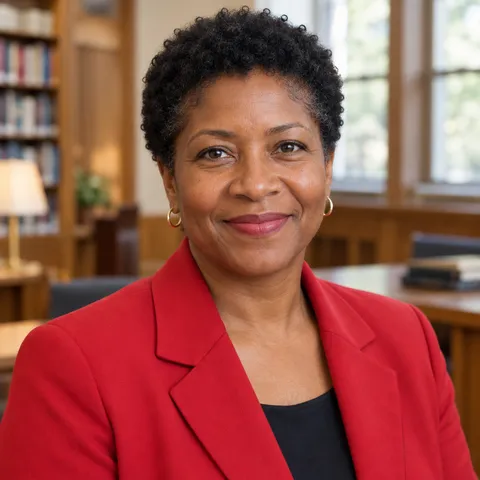
Dr. Deborah Evans
Associate Professor of Political Science
Instructor for POSC 105, Fall 2026
- Office
- Lovell Hall 262
- devans
@university.alkimi.ai
POSC 105 · Political Science
States, regimes, and political development across world regions, comparing democratic and authoritarian systems, electoral rules, political economy, and social movements.
Fall 2026 · At a glance
100-level courses: introductory, lower-division courses primarily for first-year students. Details: Undergraduate Catalog §9.16.
Associate Professor of Political Science
Instructor for POSC 105, Fall 2026
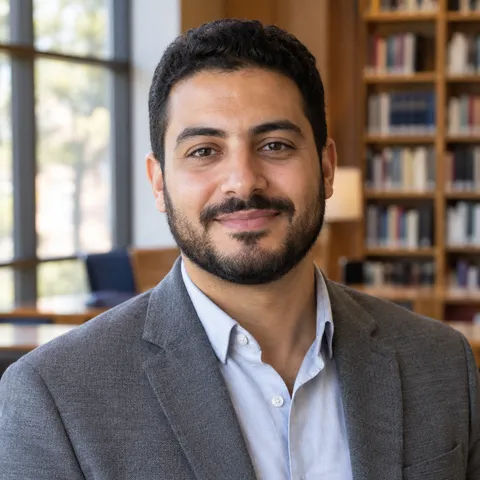
Assistant Professor of Political Science
Instructor for POSC 105, Spring 2027
Questions about a major or your plan: Academic Advising Center, Lovell Hall 101, (555) 555-0158.
Class meetings
Tue & Thu, 4:00–5:15 p.m.
Lovell Hall 210
Final exam
Thursday, December 17, 2026
3:30–5:30 p.m., Lovell Hall 210
Office hours
Mon & Wed, 10:00–11:30 a.m.
Lovell Hall 262
Tue, 2:00–3:00 p.m.
Virtual (Zoom link in Canvas)
You may use generative AI tools to explore comparative country datasets (such as Freedom House or V-Dem indices), look up historical constitutional transitions, and check spelling and grammar on preliminary drafts. You may not use generative AI to write comparative country case analyses, generate draft paragraphs for essays, fabricate comparative political indicators, or answer examination questions.
From the syllabus
Grading
Letter grades follow the university scale (Student Handbook §4.1).
Key dates
First day of classes Past
Comparative Regime Case Study Past
Midterm Examination Next
Country Comparison Term Paper
Required materials
Patrick H. O'Neil. Essentials of Comparative Politics. 7th ed., W. W. Norton & Co., 2020.
Approx. $45 digital rental, $85 print purchase.
Alkimi Comparative Politics Case Study Reader (Canvas OER).
Free digital access provided via Canvas.
Degree planning
What to take first, what this course opens up, and the requirements it can satisfy, from the Undergraduate Catalog.
No catalog course is required first.
Catalog wording: None.
Every course also counts toward the 120 credits needed for a bachelor's degree. Confirm your plan with your advisor or the Academic Advising Center.
No AP exam awards credit for POSC 105 (Undergraduate Catalog §3.11).
Registration
None.
POSC 105 is offered in both the fall and spring semesters. Register through AlkimiHub self-service registration, which opens by credit standing. Until the add deadline, you don't need instructor permission as long as seats remain and you've met the prerequisites. Details: Student Handbook §3.3.
When a seat opens, AlkimiHub offers it to the first student on the waitlist and emails you. You have 24 hours to claim it before it goes to the next student. Details: Student Handbook §3.10.
Spring 2027 registration opens
By credit standing, in AlkimiHub.
Fall 2026 withdrawal deadline
Last day to withdraw with a W or elect Pass/No Pass.
Spring 2027 add deadline
Last day to add a course or change sections (11:59 p.m.).
Fall 2027 registration opens
By credit standing, in AlkimiHub.
The Fall 2026 add deadline passed on Sep 2, 2026.
All dates: academic calendar. Registration help: Office of the Registrar.
Official course syllabus
The syllabus as filed with the department and posted in Canvas for Fall 2026.
Term: Fall 2026
Credits: 3.0
Lecture Times & Location: Tuesday & Thursday 4:00–5:15 p.m., Lovell Hall 210
Modality: In-Person
devans@university.alkimi.ai
States, regimes, and political development across world regions, comparing democratic and authoritarian systems, electoral rules, political economy, and social movements. POSC 105 introduces the comparative study of domestic political institutions, regime types, and political processes across the world's major geographic regions. Students utilize comparative methodological frameworks to explore how state capacity, national identity, electoral designs, and political economies shape governance outcomes. Moving beyond Western paradigms, the course contrasts consolidated liberal democracies with competitive authoritarian systems, military dictatorships, and hybrid regimes, investigating the systemic drivers of economic development, political violence, social movements, and democratic backsliding.
None.
Upon successful completion of POSC 105, students will be able to:
In accordance with Alkimi University Academic Policies (Student Handbook §5.8), POSC 105 operates under AI Level 2.
| Week | Dates | Topics & Readings | Assignments & Deadlines |
|---|---|---|---|
| Week 1 | Aug 27 | Introduction to Comparative Politics and the Comparative Method: What is comparative politics? The comparative method, inductive vs. deductive reasoning, most-similar vs. most-different systems designs. Reading: O'Neil, Ch. 1 | First day of classes: Wed Aug 26. |
| Week 2 | Sep 1, 3 | States, Sovereignty, Capacity, and Autonomy: Defining the state, regime, and government; historical origins of the modern state; measuring state capacity and autonomy; failed states. Reading: O'Neil, Ch. 2 | Wed Sep 2: Add/section change deadline. |
| Week 3 | Sep 8, 10 | Nations and Society: Identity, Nationalism, and Ideology: Ethnic identity, national identity, citizenship, nationalism, and political ideologies (liberalism, communism, social democracy, fascism). Reading: O'Neil, Ch. 3 | Mon Sep 7: Labor Day (no classes). Wed Sep 9: Census date (last day to drop without a W). |
| Week 4 | Sep 15, 17 | Political Economy: Systems and Development Models: Markets and property, public goods, social expenditures, taxation, central banks, regulation, and political-economic systems (liberal vs. coordinated). Reading: O'Neil, Ch. 4 | — |
| Week 5 | Sep 22, 24 | Democratic Regimes: Institutions and Constitutional Design: Foundations of democracy, separation of powers, rule of law, constitutional courts, and judicial review; Case Study 1 due Friday. Reading: O'Neil, Ch. 5 (pp. 135–160) | Comparative Regime Case Study due Fri Sep 25 at 11:59 p.m. |
| Week 6 | Sep 29, Oct 1 | Executives and Legislatures in Democratic Systems: Comparing parliamentary, presidential, and semi-presidential executive systems; coalition governance, votes of no confidence, and gridlock. Reading: O'Neil, Ch. 5 (pp. 161–185) | — |
| Week 7 | Oct 6, 8 | Electoral Systems, Party Systems, and Midterm Exam: Electoral systems: single-member district (plurality/majority) vs. proportional representation (PR) and mixed systems; Midterm Exam in class. Reading: O'Neil, Ch. 5 (pp. 186–210) | Midterm Examination (in class). |
| Week 8 | Oct 15 | Non-Democratic Regimes and Authoritarian Control (Fall Break Week): Defining non-democratic rule; totalitarianism, military regimes, one-party states, theocracies, illiberal regimes, and co-optation (Fall Break week). Reading: O'Neil, Ch. 6 | Oct 12–Oct 13: Fall break (no classes). Fri Oct 16: Midterm grades due. |
| Week 9 | Oct 20, 22 | Hybrid Regimes and Contemporary Democratic Backsliding: Competitive authoritarianism, erosion of democratic norms, electoral manipulation, executive aggrandizement, and democratic backsliding. Reading: Reader, Selected Case Studies | — |
| Week 10 | Oct 27, 29 | Political Violence: Revolutions, Civil Wars, and Insurgencies: Institutional, ideational, and individual explanations for political violence; revolutions, civil wars, insurgencies, and terrorism. Reading: O'Neil, Ch. 7 | — |
| Week 11 | Nov 3, 5 | Developed Democracies and Supranational Integration: Characteristics of advanced democracies; post-industrialism, European integration, sovereignty pooling, and populist challenges. Reading: O'Neil, Ch. 8 | Fri Nov 6: Last day to withdraw (W) or elect Pass/No Pass. |
| Week 12 | Nov 10, 12 | Communism and Post-Communist Transformations: Marxist-Leninist ideology, central planning, communist party-state structures, transitions to capitalism, shock therapy, and oligarchies. Reading: O'Neil, Ch. 9 | — |
| Week 13 | Nov 17, 19 | Developing Countries: Colonial Legacies and State Building: Imperialism, colonial legacies, artificial borders, weak institutional capacity, patrimonialism, and clientelism; Term Paper due Friday. Reading: O'Neil, Ch. 10 | Country Comparison Term Paper due Fri Nov 20 at 11:59 p.m. |
| Week 14 | Nov 24 | Political Economy of Development and Rentier States (Thanksgiving Week): The resource curse, rentier states, hydrocarbon wealth, and democratic impediments in the Middle East and Africa (Thanksgiving week). Reading: Reader, Resource Curse Selections | Nov 25–Nov 27: Thanksgiving break (no classes). |
| Week 15 | Dec 1, 3 | Globalization, Global Civil Society, and State Power: Economic globalization, multinational corporations, Bretton Woods institutions, cultural homogenization, and transnational social movements. Reading: O'Neil, Ch. 11 | — |
| Week 16 | Dec 8 | The Future of Comparative Politics and Course Synthesis: Global democratic trends, geopolitical multipolarity, comparative methods synthesis, and final examination review. Reading: O'Neil, Review | Wed Dec 9: Last day of classes. Thu Dec 10: Reading Day. |
| Finals | Dec 17 | Comprehensive Final Examination: Thursday, December 17, 2026, 3:30–5:30 p.m., Lovell Hall 210. | Scheduled during the university final examination period in Lovell Hall 210. |
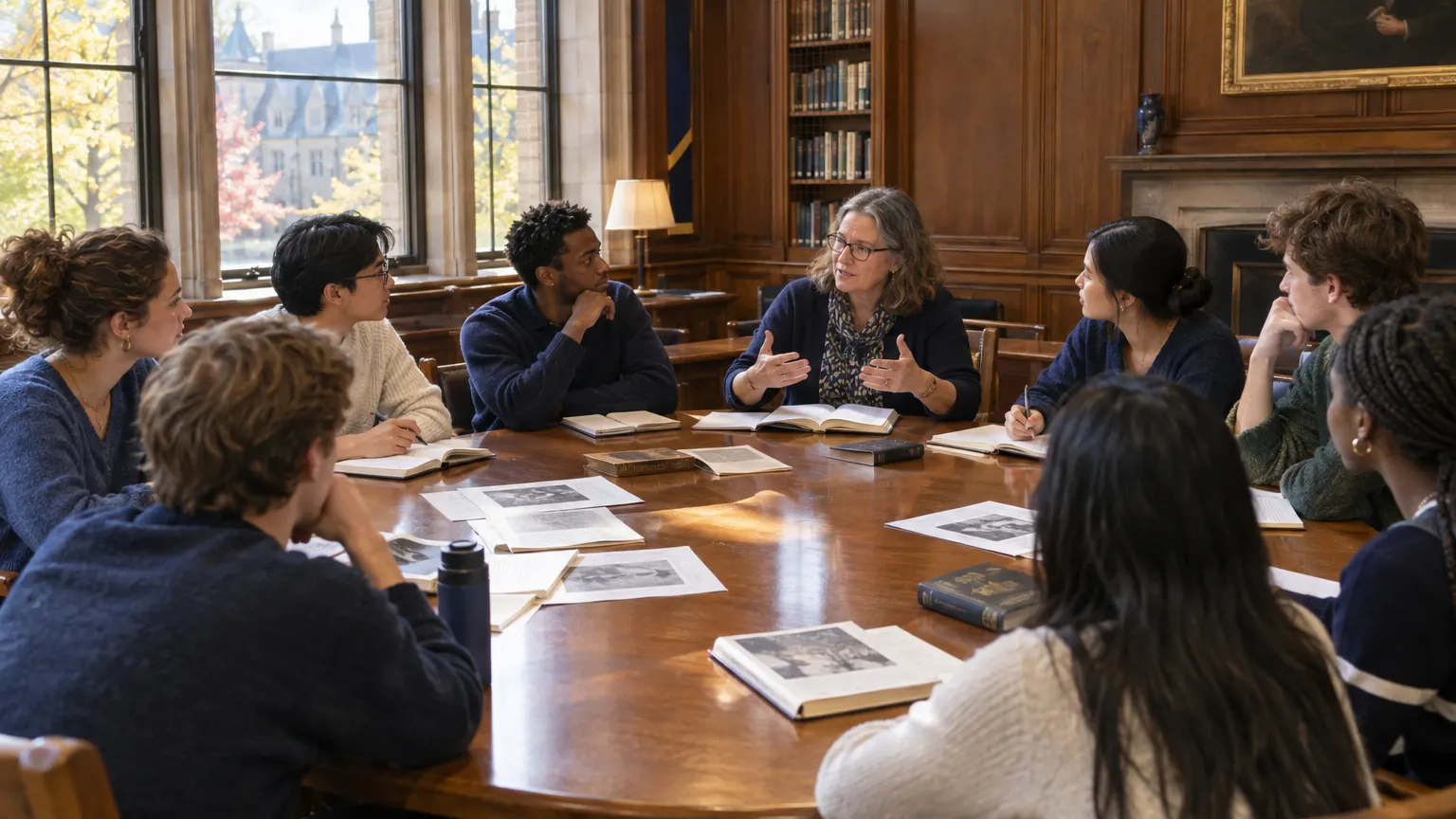
Comparative political analysis thrives on vigorous debate and collaborative case evaluation in Lovell Hall 210. Regular attendance is required. Students are allowed up to two unexcused absences without grade penalty; subsequent unexcused absences lower your final grade by one-third of a letter grade. Missing more than five class sessions will result in a failing grade. Students who miss the first two class meetings without notifying the instructor may be dropped. Students may miss class for religious observance without penalty if they notify the instructor in writing within the first two weeks of the semester (by Wednesday, September 9, 2026). Absences for university-sponsored activities (athletics, performances, conferences) are excused with a letter from the sponsoring office at least one week in advance.
Comparative case briefs and term papers submitted late lose one-third of a letter grade per calendar day overdue and will not be accepted more than four days past the deadline. Weekly online case responses cannot be submitted late.
The final examination (Thursday, December 17, 2026, 3:30–5:30 p.m.) is scheduled by the University Registrar and can't be moved without the Dean's written approval (Faculty Handbook §5.5). A student with three or more final exams on the same calendar day may reschedule one of them. Requests go to the instructor of the middle exam by the last day of classes. For this term, send the request by Wednesday, December 9, 2026 (Student Handbook §6.4).
Alkimi University is an academic community devoted to rigorous scholarship, open intellectual inquiry, and uncompromising ethical conduct. All students are subject to the regulations of the Alkimi University Academic Integrity Policy. Academic dishonesty—including plagiarism, cheating on examinations, unauthorized collaboration, fabrication of empirical data, and unauthorized submission of academic work generated by artificial intelligence—undermines the integrity of the university and carries severe disciplinary sanctions. Sanctions range from a failing grade on an assignment or exam to an administrative course failure recorded as an 'XF' on the official transcript, academic suspension, or expulsion. Suspected violations are formally investigated and resolved through the Office of Academic Integrity in accordance with Faculty Handbook §6. For detailed information, consult the Office of Academic Integrity, Lovell Hall 315, (555) 555-0163, integrity@university.alkimi.ai.
Alkimi University is committed to providing equitable educational access and reasonable accommodations for all students with documented disabilities, including physical, sensory, psychological, learning, and chronic health conditions. Students requesting academic accommodations must formally register with the Office of Accessibility Services, Harlan Hall 204, (555) 555-0155, access@university.alkimi.ai. Once approved, students will receive an official Faculty Accommodation Letter detailing approved accommodations. Students should present this letter to the instructor as early in the semester as possible, and at least one week prior to any exam or assignment requiring accommodation. Accommodations cannot be applied retroactively.
Your physical health, psychological well-being, and mental health are essential to your academic success. If you experience heightened stress, anxiety, depressive symptoms, personal trauma, or academic burnout, free, confidential counseling and medical care are available through the Hollis Health & Counseling Center, located in the Hollis Center. Routine appointments are available Monday–Friday 8:00 a.m.–6:00 p.m. and Saturday 10:00 a.m.–2:00 p.m. during the semester by calling (555) 555-0190 or emailing health@university.alkimi.ai. Urgent, 24/7 crisis psychological counseling is accessible immediately at (555) 555-0199.
advising@university.alkimi.ai
askalibrarian@university.alkimi.ai
health@university.alkimi.ai
POSC courses