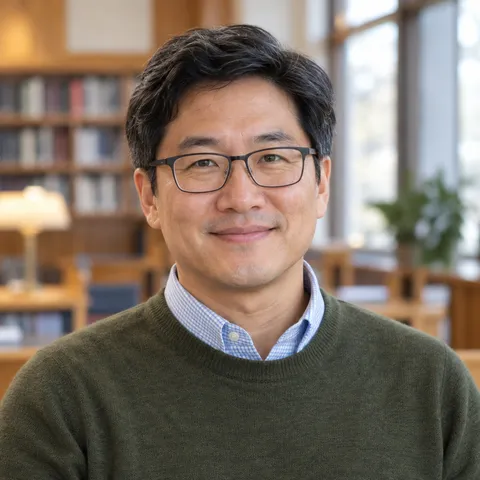
Dr. Marcus Lee
Director of the Center for Teaching & Learning
Leading instructional innovation, course design consultations, and faculty development across campus.
- Office
- Whitcombe Library 3rd Floor
- Phone
- (555) 555-0172
- mlee@university.alkimi.ai
Faculty Resources
Supporting pedagogical excellence, inclusive teaching, course design, and thoughtful technology integration across all academic disciplines.
Pedagogical Excellence
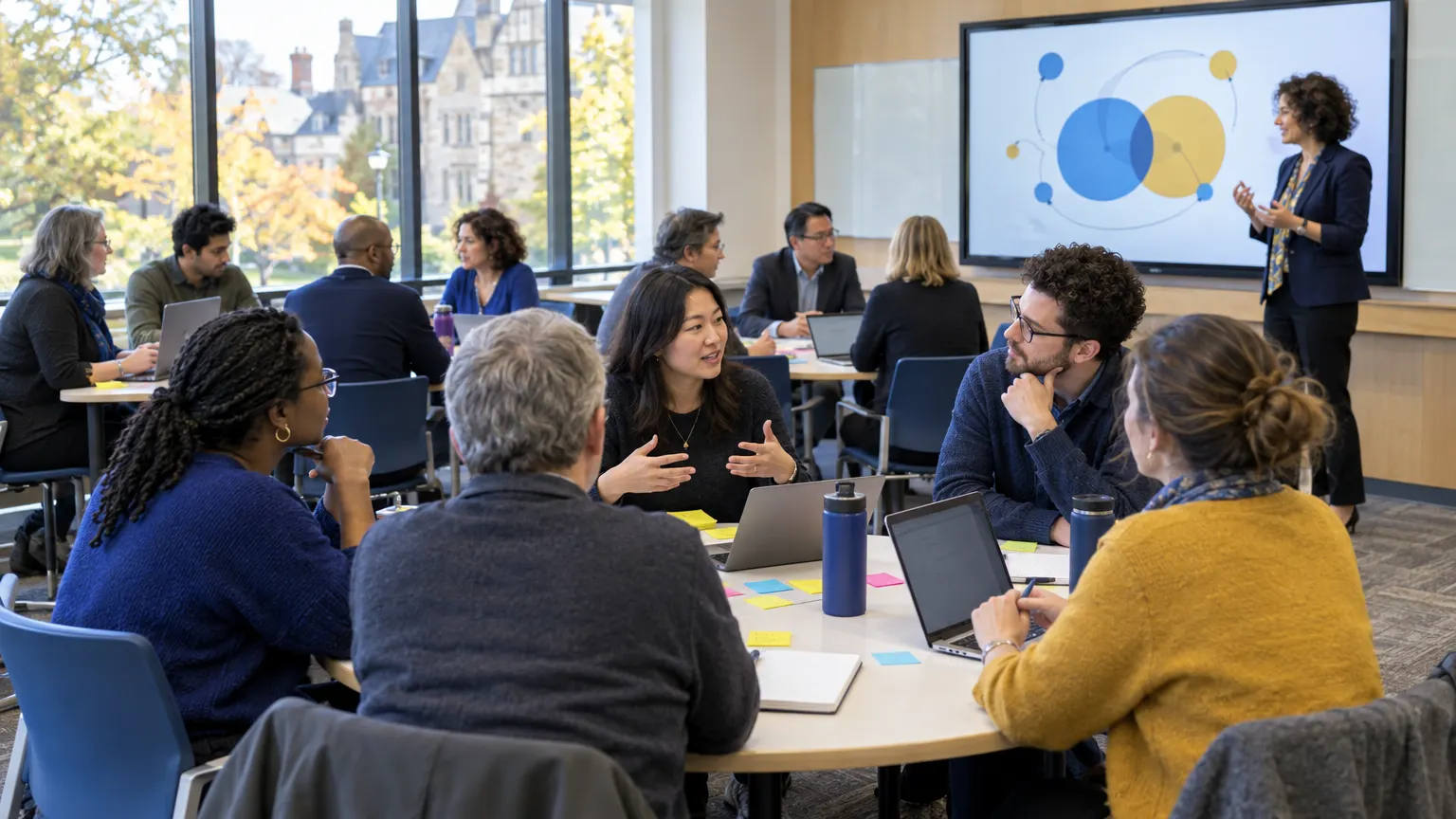
The Center for Teaching & Learning (CTL), located on the 3rd floor of Whitcombe Library, is the university hub for instructional innovation and faculty professional development.
CTL consultants partner with full-time and adjunct faculty across all five schools to design engaging syllabi, refine student learning outcomes, integrate evidence-based active learning strategies, and leverage modern digital tools without sacrificing academic rigor.
One-on-one sessions on syllabus structure, assignment scaffolding, grading rubrics, and mid-semester feedback.
Faculty working groups on AI pedagogy, inclusive course design, classroom assessment techniques, and Socratic questioning.
Director of the Center for Teaching & Learning
Leading instructional innovation, course design consultations, and faculty development across campus.
Mandatory Course Documentation
Every course syllabus posted in Canvas must include the twelve elements codified in Faculty Handbook §5.2. Syllabi must be accessible to enrolled students by the first day of classes.
Required for all undergraduate and graduate course sections.
Generative AI in the Classroom
Under Faculty Senate Resolution FS-2526-14, every instructor must designate one of three generative AI course levels on their syllabus.
Generative AI tools may not be used on any graded coursework, problem sets, essays, or examinations. The focus is on unassisted individual student mastery.
Generative AI tools may be used only for instructor-specified assignments or tasks (such as brainstorming, literature search, or code debugging).
Generative AI tools may be integrated broadly throughout coursework as collaborative or analytical partners, accompanied by transparent disclosure.
Unless the syllabus says otherwise, generative AI tools may be used for brainstorming, studying, and feedback on your own drafts, but not to produce work you submit for a grade.
If a syllabus does not explicitly state a level, students are permitted to use approved AI tools for studying, conceptual explanations, and draft critiques, but may not submit AI-generated text or code as graded work.
AI detection scores may not be the sole basis for an academic integrity report.
Due to established rates of false positives and algorithmic bias, detection software outputs cannot substantiate an academic integrity violation without corroborating evidence (e.g., fabricated citations or revision histories).
Universal Design for Learning
Ensuring instructional materials, learning platforms, and assessments provide equitable access to all learners.
In partnership with the Office of Accessibility Services (OAS), the CTL helps faculty implement Universal Design for Learning (UDL) frameworks that reduce barriers before accommodations are requested.
Students provide verified accommodation letters via the faculty portal. Instructors must implement stated accommodations promptly per Faculty Handbook §8.1.
All PDFs, Canvas pages, and presentation slides must adhere to WCAG 2.1 AA standards, featuring semantic headings and alt text per Faculty Handbook §8.3.
Extra time and reduced-distraction environments are coordinated with the OAS Testing Center in Harlan Hall 204.
Pre-recorded lectures and video course materials must include synchronized accurate closed captions.

Instructional Assessment
Student Course Feedback surveys are administered online during the final two weeks of instruction each semester, closing prior to final examinations.
Pedagogical Innovation
Eight undergraduate courses are pioneering custom, instructor-curated Alkimi Course Assistants embedded inside Canvas.
Developed in close collaboration with the AI Advisory Council and the Center for Teaching & Learning, the Fall 2026 Course Assistant Pilot equips students with 24/7 Socratic learning partners grounded strictly on verified course materials.
Prof. Ellen Whitaker
Dr. Martin Osei
Dr. Daniel Kim
Dr. Anika Sharma
Dr. Leila Haddad
Dr. Tomás Rivera
Dr. Claire Donovan
Dr. Janelle Price
Explore how course assistants are configured, read student feedback, and review pilot learning outcomes.