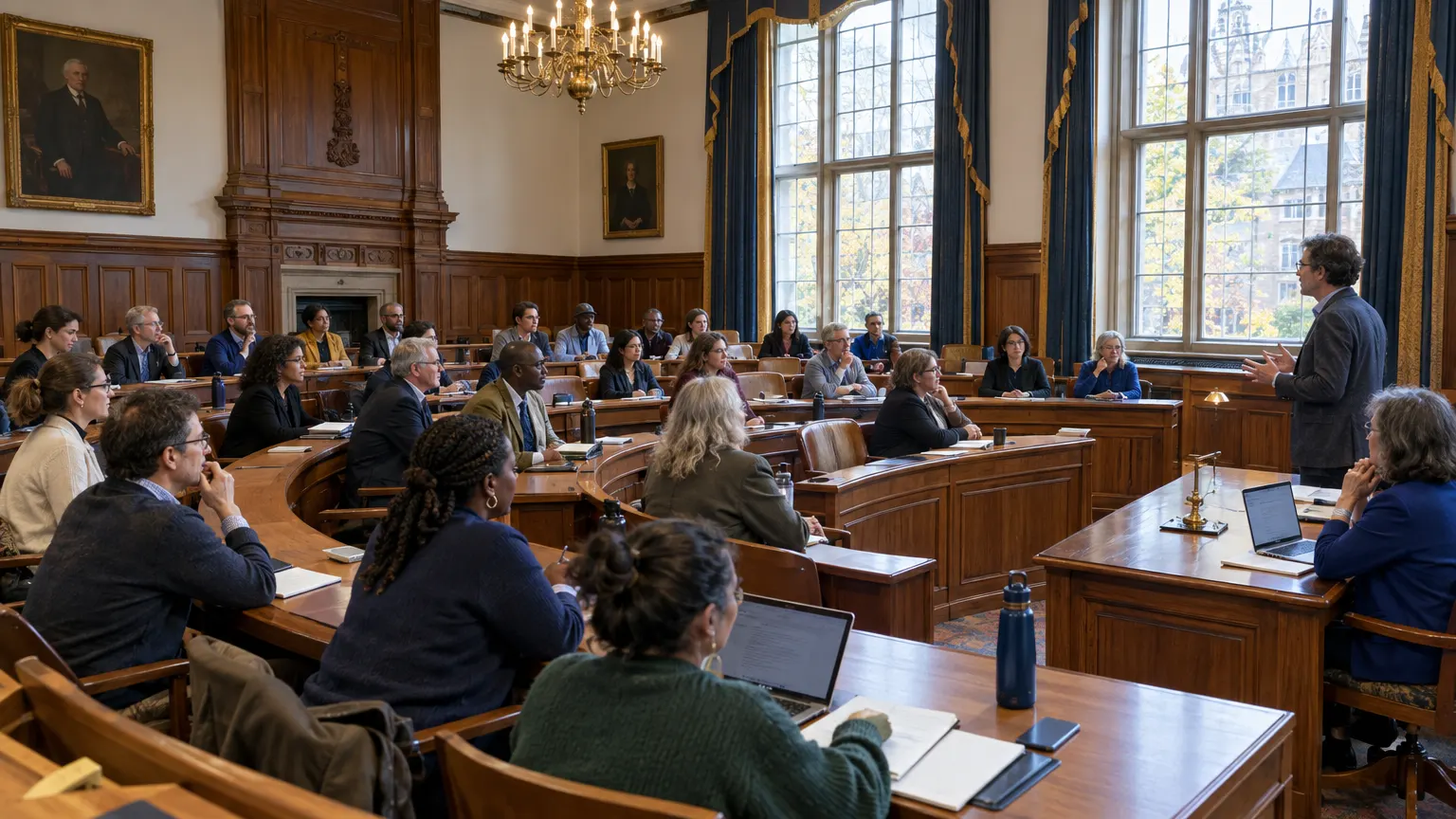

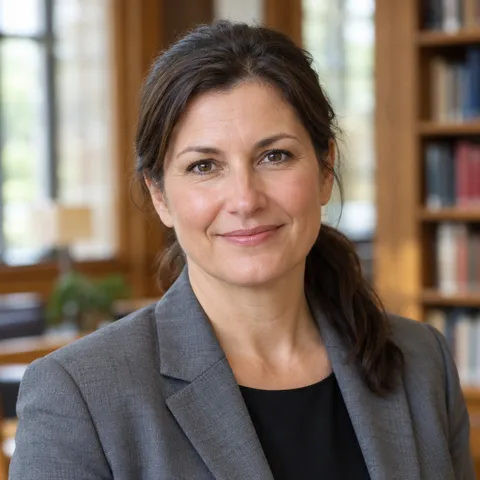
Prof. Rebecca Stroud
Professor of Political Science; President of the Faculty Senate (2026–27)
- Office
- Founders Hall 220
- Phone
- (555) 555-0168
- rstroud@university.alkimi.ai
Faculty & Staff
Faculty, staff, and administration working in collegial partnership to guide academic standards, curricula, institutional policy, and peer evaluation.
Constitutional Foundation
Shared governance at Alkimi University embodies the principle that academic excellence thrives when the faculty exercises primary responsibility over the curriculum, degree requirements, instructional standards, and peer review for promotion and tenure.
Pursuant to Faculty Handbook §2: The Faculty Senate and Standing Committees, the Faculty Senate serves as the primary representative legislative body of the faculty. Standing committees, joint administrative-faculty councils, and specialized adjudicative boards partner with the President, Provost, and Board of Trustees to steward the university's academic mission.
Legislative Chamber
The representative legislative body of the faculty, deliberating on educational policy, academic regulations, faculty welfare, and institutional priorities.
First Wednesday of each month, September–May (no January meeting), 3:30–5:00 p.m., Faculty Senate Chamber, Founders Hall 225. 2026–27 dates: Sep 2, Oct 7, Nov 4, Dec 2, Feb 3, Mar 3, Apr 7, May 5.
Meetings follow Robert's Rules of Order Newly Revised. A quorum requires 21 voting Senators. Faculty members, administrators, and students are welcome to observe open sessions.
September Senate Meeting
Fall opening session & committee confirmations
October Senate Meeting
Curricular reviews & budget briefings
November Senate Meeting
Regular legislative session
December Senate Meeting
Fall term conclusions & academic policies
February Senate Meeting
Spring legislative session
March Senate Meeting
Officer election nominations
April Senate Meeting
Spring policy & award recognitions
May Senate Meeting
Final business & incoming officer transition
Resolution FS-2526-14: Three-Level AI Syllabus Policy
Adopted April 1, 2026 (Roll call vote: 32 in favor, 5 against, 3 abstentions)
Amended Faculty Handbook §5.2 to mandate that all course syllabi explicitly designate Generative AI Level 1 (Prohibited for graded work), Level 2 (Permitted with disclosure for specified tasks), or Level 3 (Permitted broadly with disclosure). The resolution codifies student disclosure requirements and forbids automated AI detection scores from serving as the sole evidentiary basis for integrity sanctions.
Final Grade Submission Window Proposal
Debated April 1, 2026; Tabled May 6, 2026 (Vote: 15–21–2)
Considered a proposal to extend the final grade submission window from 72 to 96 hours. University Registrar Colleen O'Hara briefed the Senate on Commencement certification timelines, explaining that Spring grades must be submitted within 72 hours to certify graduating seniors for Commencement and run academic probation checks before residence halls close. A motion to take the proposal from the table failed on May 6, 2026 (15 in favor, 21 against, 2 abstaining), keeping the 72-hour deadline in force.
Elected by the faculty to lead the Senate and represent the faculty on the Executive Committee.
Professor of Political Science; President of the Faculty Senate (2026–27)

Associate Professor of Mechanical Engineering; Vice President of the Faculty Senate
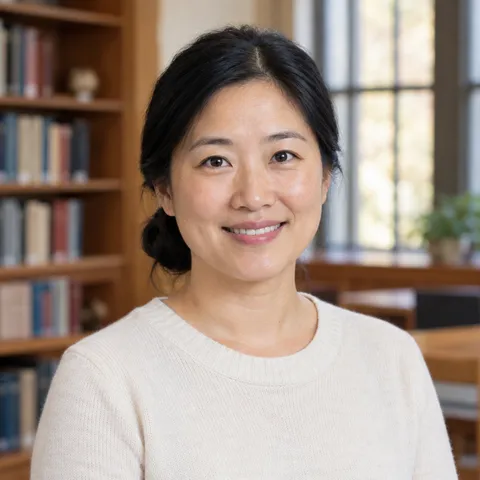
Associate Professor of Mathematics; Secretary of the Faculty Senate
Founders Hall 220 • Phone: (555) 555-0168
Email: senate@university.alkimi.ai
Office hours: Monday–Thursday 9:00 a.m.–3:00 p.m.
Academic Programs
Reviewing, evaluating, and recommending all undergraduate and graduate courses, majors, minors, and degree requirements.
The University Curriculum Committee exercises primary faculty authority over the educational offerings of Alkimi University. Composed of 11 voting faculty members from across the five schools, two student representatives, and ex-officio leaders (including the Registrar and University Librarian), the UCC ensures that every program meets institutional rigor, accreditation criteria, and the 40-credit Alkimi Core requirements.
All curricular proposals—including new courses, course modifications, new minors, and program changes—must be routed electronically through Curriculog.
To be eligible for the monthly agenda, proposals must complete all departmental and college-level approvals at least 14 calendar days prior to the UCC meeting. Proposals submitted after the 14-day cutoff are deferred to the subsequent month.
Third Wednesday of each month, September–April (no December meeting), 2:00–3:30 p.m., Lovell Hall 330. 2026–27 dates: Sep 16, Oct 21, Nov 18, Jan 20, Feb 17, Mar 17, Apr 21. Proposals are due in Curriculog 14 days before the meeting.
September UCC
Curriculog proposals due Sep 2
October UCC
Curriculog proposals due Oct 7
November UCC
Curriculog proposals due Nov 4
January UCC
Curriculog proposals due Jan 6
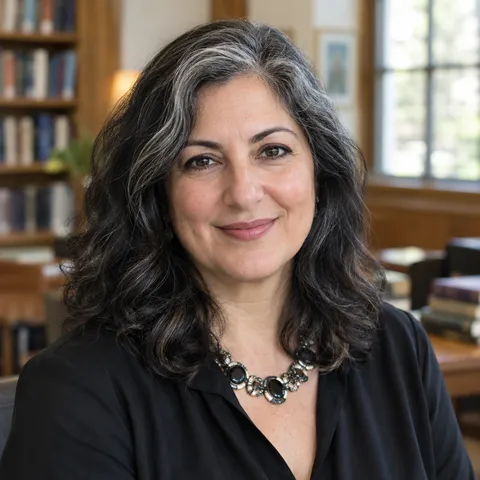
Professor of English; Chair of the University Curriculum Committee
Coordinating undergraduate and graduate curriculum proposals across all five academic schools.
Peer Evaluation
Reviewing candidate dossiers for reappointment with tenure and promotion to Associate Professor and Professor across all schools.
The University Promotion and Tenure Committee consists of seven tenured Full Professors elected from all five schools. To preserve impartiality, academic administrators (Department Chairs, Associate Deans, Deans, and the Provost) are ineligible to serve.
Per Faculty Handbook §11.1: Criteria for Tenure and Promotion to Associate Professor, tenure and promotion to Associate Professor require demonstrated excellence in either teaching or scholarship, at least "very good" performance in the other, and satisfactory university and professional service.
Dossiers due to the department chair September 15, 2026; department vote by October 16, 2026; college committee by November 20, 2026; University P&T Committee meets December 2026–February 2027; the Provost's recommendation by March 12, 2027; Board of Trustees action April 2027.
Dossiers to Department Chair
Candidate submission deadline
Department Faculty Vote
Chair & department evaluations to dean
College Committee Review
School/college P&T recommendations to provost
UPTC Deliberative Sessions
University committee meets weekly Dec 2026–Feb 2027
Provost Recommendations
Written notifications delivered to candidates
Board of Trustees Action
Official final action by Trustees

Professor of History; Chair of the University Promotion & Tenure Committee
Guiding university-wide tenure reviews, comprehensive third-year reviews, and promotion evaluations.
Detailed dossier preparation guidelines, candidate rights, and reconsideration rules:
Student Academic Honor
Adjudicating contested allegations of academic misconduct, upholding standards of intellectual honesty, and maintaining hearing fairness.
The Academic Integrity Board operates under the administrative authority of the Office of Academic Integrity. The board adjudicates cases that cannot be resolved through informal faculty agreements or that involve severe, repeated, or institution-level infractions.
Hearing Schedule: Hearings held as needed, generally Tuesdays 1:00–4:00 p.m., Lovell Hall 315.
Panel Composition: Every hearing panel consists of three voting members: two faculty members drawn from the board roster and one trained student representative from the Student Honor Council.
Standard of Proof: Decisions are evaluated using the preponderance of the evidence standard ("more likely than not").
10-Day Faculty Deadline: Faculty must report suspected violations to the Office of Academic Integrity within 10 business days of discovery (Faculty Handbook §6.2: The Mandatory 10-Business-Day Reporting Deadline).
Automated AI Detection Limitation: Per university policy (Student Handbook §5.10: AI Detection Tools and Evidentiary Limitations), AI detection scores may never serve as the sole basis for an academic integrity referral or sanction. Corroborating objective evidence is strictly required.
Sanctions range from educational modules and assignment failure to the XF transcript notation (Failure due to Academic Dishonesty), suspension, or expulsion.
Pursuant to Student Handbook §5.6: Removal of the XF Grade Notation, a student may petition the board to remove the "X" (converting to an "F") no sooner than one full year after the sanction, provided they complete the Academic Integrity Seminar and have no further violations.

Professor of Philosophy; Chair of the Academic Integrity Board
Presiding over board hearing panels, evidentiary reviews, and academic honor standards.
Lovell Hall 315 • Phone: (555) 555-0163
Email: integrity@university.alkimi.ai
Research Ethics
Reviewing and monitoring all research involving human participants to safeguard ethical standards, participant safety, and regulatory compliance.
The Institutional Review Board, operating under the Associate Provost for Research, reviews all proposed research involving human participants conducted by Alkimi University faculty, staff, or students, regardless of funding source.
Full-board meetings the second Thursday of each month; submissions due 21 days before the meeting.
Protocols requiring full-board review must be submitted through the Cayuse IRB electronic system at least 21 days prior to the second Thursday of each month. Exempt and expedited protocols are reviewed on a rolling basis.
In accordance with AI Guidelines §5.1: Institutional Review Board (IRB) and Human Subjects, studies utilizing generative AI models to generate research stimuli, conduct conversational trials, or analyze human subject data require explicit IRB data-handling safeguards and informed consent protocols.
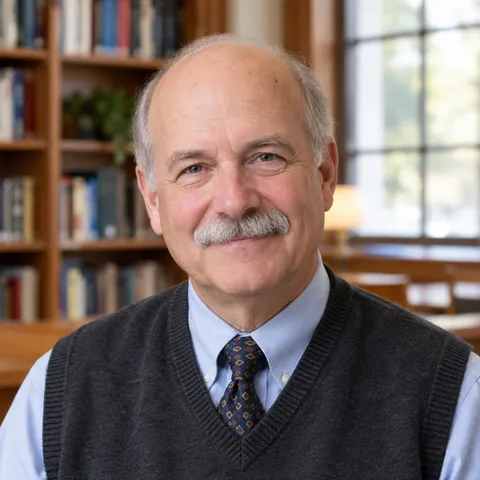
Professor of Psychology; Chair of the Institutional Review Board
Overseeing human subjects research protocols, ethical compliance, and data privacy safeguards.
Meridian Science Center 150
Phone: (555) 555-0132 • research@university.alkimi.ai
Technological Innovation & Oversight
Guiding Alkimi University in the responsible, ethical, pedagogical, and technical deployment of artificial intelligence across all university operations.
Established jointly by the President and Provost, the AI Advisory Council operates at the intersection of academic policy, digital privacy, and pedagogical innovation. The council brings together senior academic leaders, computing faculty, instructional designers, administrative data custodians, and students.
The council convenes on the Fourth Thursday of each month during the academic year, 12:00–1:00 p.m., hybrid. in Whitcombe Library Room 310 and via video link.
Chaired by CTL Director Dr. Marcus Lee. Oversees course learning assistant pilots, syllabus rubrics, and faculty training.
Chaired by IT Director Sanjay Mehta. Enforces Zero Data Retention, SSO integration, and data classification limits.
Chaired by Dr. Sofia Lindgren. Safeguards student equity, AI disclosure transparency, and digital accessibility.
Course Learning Assistant Launch: Activated eight pilot learning assistants in Canvas for Fall 2026 across HIST 204, BIO 101, CHEM 101, MATH 140, ENGL 210, CS 150, ECON 201, and NURS 220, logging 842 distinct student interactions across the courses in the first 36 hours.
Pilot Evaluation Plan Approved: Adopted unanimously on August 27, 2026 (vote: 17–0–0) to assess analytics, student learning outcome mastery, and voluntary anonymized surveys in September, October, and December.
Alkimi Enterprise Security Review: Verified zero-data-retention guarantees, affirming that student educational records and institutional prompts are never cached or used for foundational model training.

Associate Professor of Computer Science; Co-chair of the AI Advisory Council
Leading academic guidelines, pedagogical pilots, and student equity reviews.
Vice President and Chief Information Officer
Overseeing enterprise IT architecture, cybersecurity audits, and AlkimiID identity systems.
Explore approved tools, syllabus guidelines, and the full directory of university assistants: