
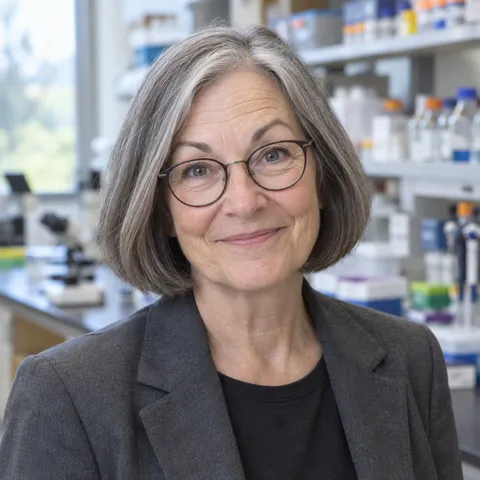
Dr. Teresa Bellini
Professor of Biology
Assigns first-year advisors and approves program changes (Graduate Handbook §4.1, §2.9).
College of Arts & Sciences · Master's degree
The MS in Biology is a research degree. Students join a faculty lab in their first semester, design an original thesis project in cell and molecular biology, physiology, or ecology and evolution, and defend it in their second year.
MS · 32 credits
The MS in Biology is a research degree. Students join a faculty lab in their first semester, design an original thesis project in cell and molecular biology, physiology, or ecology and evolution, and defend it in their second year.
Program requirements, the Graduate Program Director, and tuition for this degree are set out in Graduate Handbook §12.1: Master of Science in Biology (MS).
| Requirement | Credits |
|---|---|
| Graduate core seminars: research design, biostatistics, and two of cell and molecular biology, physiology, and ecology and evolution | 18 |
| Graduate electives chosen with the major professor | 8 |
| BIO 599 Master's Thesis Research | 6 |
| Total | 32 |
Master's thesis in BIO 599, defended before a three-member Supervisory Committee.
At a glance
Program: Graduate Handbook §12.1 · Time limits: Graduate Handbook §3.5
Graduate Program Director
Professor of Biology
Assigns first-year advisors and approves program changes (Graduate Handbook §4.1, §2.9).
Department
32 credits
The courses that count toward each part of the MS curriculum, with the terms each is usually offered.
BIO 510 Research Design in Biology 3 credits Fall
Students frame testable hypotheses, choose controls and sample sizes, and critique published designs in cell, organismal, and field biology. Each student drafts a design outline for a thesis project.
BIO 520 Biostatistics 4 credits Fall
Covers linear models, mixed-effects models, and nonparametric tests using R on biological data sets. The weekly computer lab applies each method to data from faculty research groups.
BIO 530 Cell and Molecular Biology 4 credits Fall
Examines gene regulation, signal transduction, membrane trafficking, and the cell cycle through primary literature. The weekly lab teaches cell culture, microscopy, and quantitative PCR.
BIO 535 Advanced Physiology 4 credits Spring
Studies how cardiovascular, respiratory, renal, and endocrine systems maintain homeostasis across vertebrate species. The weekly lab measures physiological responses to temperature, oxygen, and exercise.
BIO 540 Ecology and Evolution 4 credits Fall
Covers population genetics, natural selection, community ecology, and phylogenetic methods. The weekly lab includes field sampling along the Merrow River and analysis of the resulting data.
BIO 550 Graduate Seminar in Biology 3 credits Spring
Students present their thesis proposals, respond to peer and faculty review, and discuss current papers from visiting speakers. Each student files a written proposal with the major professor by the end of term.
BIO 555 Scientific Writing for Biologists 2 credits Spring
Students draft and revise a research paper, a grant summary, and a conference abstract with detailed feedback on structure and evidence. Peer review workshops meet weekly.
BIO 560 Molecular Genetics and Genomics 3 credits Fall
Surveys genome structure, sequencing technologies, gene editing, and the genetics of complex traits. Lectures draw on recent papers in model and non-model organisms.
BIO 565 Bioinformatics and Computational Biology 3 credits Fall
Teaches sequence alignment, RNA-seq analysis, and phylogenetic inference with command-line and R tools. In the weekly lab, students analyze a public data set from start to finish.
BIO 570 Conservation Biology 3 credits Fall
Covers extinction risk, habitat fragmentation, population viability analysis, and protected-area design. Case studies come from freshwater and forest systems in the region.
BIO 575 Microbial Ecology 3 credits Fall, Spring
Students read and discuss papers on soil, aquatic, and host-associated microbial communities and the methods used to study them. Each student leads two discussions.
BIO 599 Master's Thesis Research 3 credits Fall, Spring, Summer
Independent thesis research under the direction of the major professor and Supervisory Committee. Students register for 3 credits per term, 6 credits in all.
Sample Roadmap
A representative term-by-term sequence for the MS. “Elective” is one 3-credit course chosen from the program's elective list above, with your advisor.
Graduate Handbook
Every master's program at Alkimi follows the same Graduate School milestones. Each links to the handbook section that governs it.
Thesis and non-thesis pathways
Graduate Handbook §5.1: Master s Degree Milestones: Thesis vs. Non-Thesis Options
Supervisory committee
Graduate Handbook §4.2: Master s Supervisory Committee Composition
Format review and ProQuest submission
Graduate Handbook §5.6: Thesis and Dissertation Format Review and ProQuest Submission
Intent to Graduate and degree audit
Graduate Handbook §11.1: Filing the Intent to Graduate and Degree Audits
Graduate students must keep a cumulative GPA of 3.000 or higher to stay in good standing and to graduate (Graduate Handbook §3.1).
Thesis students choose a major professor before completing 12 credits. Non-thesis students are advised by the Graduate Program Director or a capstone coordinator (Graduate Handbook §4.1).
2026–27
Graduate tuition
$1,450
Per credit hour, plus $300 in mandatory fees per semester. 32 credits come to $46,400 in tuition at 2026–27 rates.
Assistantship stipend
$21,000
9-month stipend for a master's teaching, research, or graduate assistant.
Rates: Graduate Handbook §6.2
Assistantships in this program
Full-time students are considered for teaching assistantships in the introductory biology laboratories and for research assistantships on faculty grants.
A 20-hour assistantship includes a full tuition waiver of up to 12 credits per semester and covers mandatory fees (Graduate Handbook §6.3).
People
Chair: Dr. Martin Osei
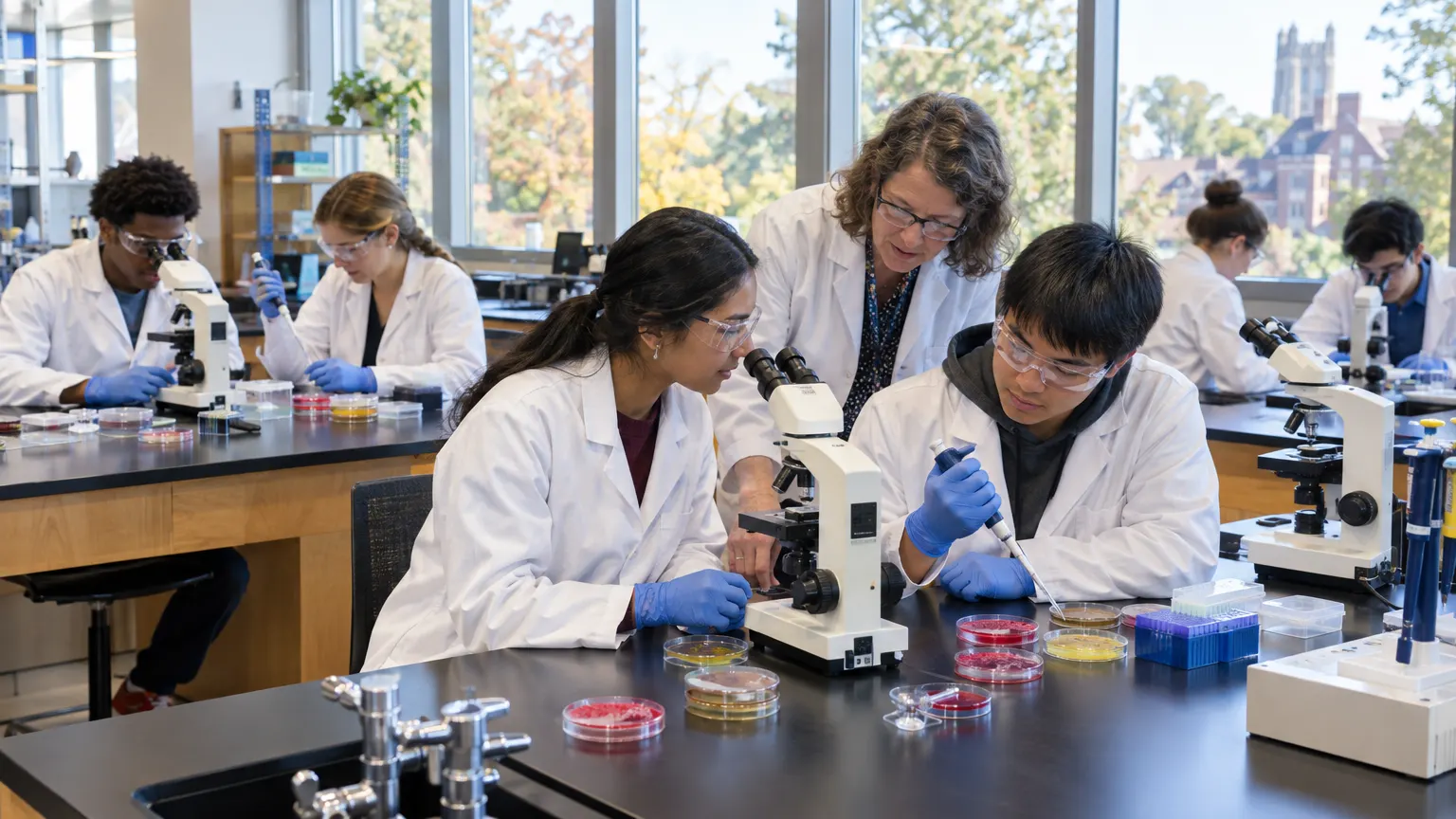
Biology students work from the cell to the ecosystem, with weekly laboratories from the first semester and faculty-mentored research in the senior capstone.