
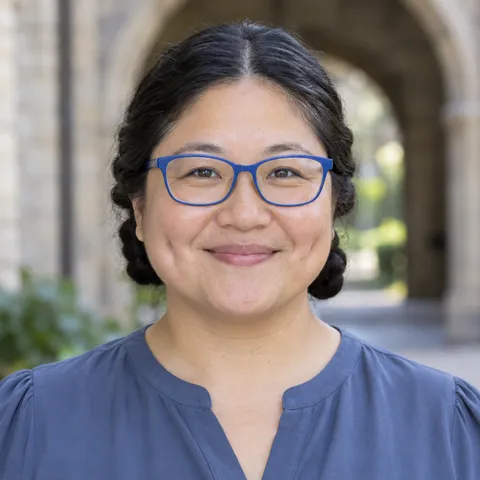
Dr. Keiko Tanaka
Assistant Teaching Professor of Environmental Science
Instructor for GEOL 101, Fall 2026 and Spring 2027
- Office
- Meridian Science Center 416
- ktanaka
@university.alkimi.ai
GEOL 101 · Geology
Earth materials, plate tectonics, mineral and rock formation, structural deformation, volcanism, earthquakes, and surface geological processes, with a weekly three-hour laboratory.
Fall 2026 · At a glance
100-level courses: introductory, lower-division courses primarily for first-year students. Details: Undergraduate Catalog §9.30.
Assistant Teaching Professor of Environmental Science
Instructor for GEOL 101, Fall 2026 and Spring 2027
Questions about a major or your plan: Academic Advising Center, Lovell Hall 101, (555) 555-0158.
Class meetings
Lecture
Mon, Wed, Fri, 1:00–1:50 p.m.
Meridian Science Center 160
Lab
Wed, 8:00–10:50 a.m.
Meridian Science Center 132
Final exam
Wednesday, December 16, 2026
3:30–5:30 p.m., Meridian Science Center 160
Office hours
Mon & Thu, 9:00–10:30 a.m.
Meridian Science Center 416
Fri, 9:00–10:00 a.m.
Virtual (Zoom link in Canvas)
You may use generative AI platforms to explore background geological terminology, study conceptual analogies for plate tectonic mechanisms, or review the formatting and clarity of problem set calculations. You may not use generative AI to fabricate field observation data from the Merrow River valley, generate rock identification descriptions, complete laboratory worksheets, or access AI during exams.
From the syllabus
Grading
Letter grades follow the university scale (Student Handbook §4.1).
Key dates
First day of classes Past
Midterm Exam 1: Earth Materials and Deep Time Past
Midterm Exam 2: Structural Geology and Tectonics Next
Laboratory Practical Examination
Required materials
Stephen Marshak. Earth: Portrait of a Planet. 7th ed., W. W. Norton & Company, 2022.
Approx. $65 digital rental, $120 print purchase.
Keiko Tanaka. GEOL 101 Physical Geology Laboratory Manual and Merrow River Field Guide. Alkimi University Copy Center, Fall 2026.
Approx. $25.
Geological field toolkit: 10x achromatic hand lens, streak plate, and waterproof field notebook.
Approx. $15.
Degree planning
What to take first, what this course opens up, and the requirements it can satisfy, from the Undergraduate Catalog.
No catalog course is required first.
Catalog wording: None.
No other catalog course lists GEOL 101 as a prerequisite.
Every course also counts toward the 120 credits needed for a bachelor's degree. Confirm your plan with your advisor or the Academic Advising Center.
No AP exam awards credit for GEOL 101 (Undergraduate Catalog §3.11).
Registration
None.
GEOL 101 is offered in both the fall and spring semesters. Register through AlkimiHub self-service registration, which opens by credit standing. Until the add deadline, you don't need instructor permission as long as seats remain and you've met the prerequisites. Details: Student Handbook §3.3.
When a seat opens, AlkimiHub offers it to the first student on the waitlist and emails you. You have 24 hours to claim it before it goes to the next student. Details: Student Handbook §3.10.
Spring 2027 registration opens
By credit standing, in AlkimiHub.
Fall 2026 withdrawal deadline
Last day to withdraw with a W or elect Pass/No Pass.
Spring 2027 add deadline
Last day to add a course or change sections (11:59 p.m.).
Fall 2027 registration opens
By credit standing, in AlkimiHub.
The Fall 2026 add deadline passed on Sep 2, 2026.
All dates: academic calendar. Registration help: Office of the Registrar.
Official course syllabus
The syllabus as filed with the department and posted in Canvas for Fall 2026.
Term: Fall 2026
Credits: 4.0
Lecture Times & Location: Monday, Wednesday, Friday 1:00–1:50 p.m., Meridian Science Center 160
Laboratory Time & Location: Wednesday 8:00–10:50 a.m., Meridian Science Center 132
Modality: In-Person Lecture and Laboratory
ktanaka@university.alkimi.ai
Earth materials, plate tectonics, mineral and rock formation, structural deformation, volcanism, earthquakes, and surface geological processes, with a weekly three-hour laboratory. GEOL 101 introduces students to the dynamic physical processes that shape planet Earth from its core to its surficial crust. We examine the chemical composition and crystalline structure of minerals, the genesis of igneous, sedimentary, and metamorphic rocks, and the fundamental paradigm of plate tectonics. Students explore volcanic activity, earthquake seismology, mountain building, structural deformation, and surficial landscape evolution driven by river systems, groundwater, glaciers, and coastal forces. Weekly three-hour laboratory sessions emphasize hands-on mineral and rock specimen analysis, topographic and geologic map interpretation, and field excursions investigating rock formations and fluvial geomorphology across the Merrow River watershed.
None.
Upon successful completion of GEOL 101, students will be able to:
In accordance with Alkimi University Academic Policies (Student Handbook §5.8), GEOL 101 operates under AI Level 2.
| Week | Dates | Topics & Readings | Laboratory | Assignments & Deadlines |
|---|---|---|---|---|
| Week 1 | Aug 26, 28 | The Earth in Context and Planetary Structure: Cosmology and planetary accretion; Earth's differentiated internal layers (crust, mantle, core); foundational principles of physical geology. Reading: Marshak, Ch. 1 | No lab meetings this week. | First day of classes: Wed Aug 26. |
| Week 2 | Aug 31–Sep 4 | Minerals and the Building Blocks of Rocks: Crystalline structures, chemical bonding, silicon-oxygen tetrahedra, and diagnostic physical properties of rock-forming minerals. Reading: Marshak, Ch. 2 & Interlude A | Lab 1: Mineral Identification and Physical Properties. | Wed Sep 2: Add/section change deadline. |
| Week 3 | Sep 9, 11 | Magma Genesis, Volcanism, and Igneous Rocks: Magma generation, partial melting, fractional crystallization, Bowen's reaction series, and intrusive versus extrusive igneous bodies. Reading: Marshak, Ch. 3 & 4 | Lab 2: Igneous Rock Identification and Magmatic Textures. | Mon Sep 7: Labor Day (no classes). Wed Sep 9: Census date (last day to drop without a W). |
| Week 4 | Sep 14–18 | Weathering, Sedimentation, and Sedimentary Rocks: Mechanical and chemical weathering, sediment transport, depositional environments, lithification, and sedimentary structures. Reading: Marshak, Ch. 5 & 6 | Lab 3: Sedimentary Rock Identification and Depositional Environments. | — |
| Week 5 | Sep 21–25 | Metamorphism and Metamorphic Rocks & Midterm Exam 1: Metamorphic agents (temperature, pressure, hydrothermal fluids), foliation, metamorphic facies, and regional versus contact metamorphism; Midterm Exam 1 in class Friday. Reading: Marshak, Ch. 7 & Review | Lab 4: Metamorphic Rock Identification and Foliation. | Midterm Exam 1: Earth Materials and Deep Time (in class). |
| Week 6 | Sep 28–Oct 2 | Geologic Time, Stratigraphy, and Earth History: Relative dating principles, fossil succession, unconformities, radiometric isotopic decay, and the geologic time scale. Reading: Marshak, Ch. 8 & 9 | Lab 5: Topographic Maps, Contours, and Digital Elevation Models. | — |
| Week 7 | Oct 5–9 | Deformation, Folds, Faults, and Mountain Building: Stress and strain, brittle versus ductile deformation, joints, dip-slip and strike-slip faults, anticlines, and synclines. Reading: Marshak, Ch. 10 | Lab 6: Geological Structures, Strike, Dip, and Block Diagrams. | — |
| Week 8 | Oct 14, 16 | Plate Tectonics: Mechanisms and Boundaries (Fall Break Week): Continental drift hypothesis, paleomagnetism, seafloor spreading, subduction zones, and tectonic plate boundaries; Fall break week. Reading: Marshak, Ch. 11 | Lab 7: Geologic Maps and Cross-Section Interpretation. | Oct 12–Oct 13: Fall break (no classes). Fri Oct 16: Midterm grades due. |
| Week 9 | Oct 19–23 | Earthquake Seismology and Global Geohazards: Elastic rebound theory, seismic wave propagation (P, S, and surface waves), seismographs, Richter and moment magnitude scales. Reading: Marshak, Ch. 12 | Lab 8: Field Investigation 1: Bedrock Stratigraphy in the Merrow River Valley. | — |
| Week 10 | Oct 26–30 | Deep Earth Dynamics and Continental Growth & Midterm Exam 2: Mantle convection, hotspots, supercontinent cycles, and tectonic evolution of the North American continent; Midterm Exam 2 in class Friday. Reading: Marshak, Ch. 13 & Review | Lab 9: Earthquake Seismology, Epicenter Triangulation, and Magnitude. | Midterm Exam 2: Structural Geology and Tectonics (in class). |
| Week 11 | Nov 2–6 | Fluvial Systems and River Valley Evolution: Drainage basins, stream discharge, channel morphology, sediment load, flood dynamics, and fluvial erosion in the Merrow River watershed. Reading: Marshak, Ch. 14 | Lab 10: Plate Tectonics Reconstruction and Sea-Floor Spreading. | Fri Nov 6: Last day to withdraw (W) or elect Pass/No Pass. |
| Week 12 | Nov 9–13 | Groundwater Hydrology and Aquifer Systems: Porosity and permeability, water table dynamics, unconfined and confined aquifers, Darcy's law, karst topography, and contamination. Reading: Marshak, Ch. 15 | Lab 11: Fluvial Geomorphology and Merrow River Sediment Transport. | — |
| Week 13 | Nov 16–20 | Mass Wasting and Slope Stability Hazards: Types of mass wasting (slump, rockfall, debris flow), driving and resisting forces, slope stability, and landslide hazard mitigation. Reading: Marshak, Ch. 16 | Lab 12: Groundwater Hydrology, Aquifers, and Contaminant Flow. | — |
| Week 14 | Nov 23 | Coastal Geomorphology and Shoreline Dynamics (Thanksgiving Week): Coastal wave dynamics, littoral drift, barrier islands, and marine transgression; Thanksgiving break week (no lab meets). Reading: Marshak, Ch. 17 | No lab meetings this week (holiday). | Nov 25–Nov 27: Thanksgiving break (no classes). |
| Week 15 | Nov 30–Dec 4 | Glaciation, Paleoclimate, and Ice Ages: Glacial ice formation and flow, alpine and continental glaciation, moraines, Milankovitch cycles, and Quaternary climate records. Reading: Marshak, Ch. 18 | Lab 13: Glacial Landforms, Paleoclimate Proxies, and Coastal Processes. | — |
| Week 16 | Dec 7, 9 | Energy and Mineral Resources & Course Synthesis: Mineral and energy resources, fossil fuel reservoirs, geothermal energy, critical minerals for clean technology, and course synthesis. Reading: Marshak, Ch. 19 & Review | Lab 14: Comprehensive Laboratory Practical Examination. | Wed Dec 9: Last day of classes. Thu Dec 10: Reading Day. Laboratory Practical Examination (in lab section). |
| Finals | Dec 16 | Comprehensive Final Examination: Wednesday, December 16, 2026, 3:30–5:30 p.m., Meridian Science Center 160. | — | Comprehensive final examination covering mineralogy, petrology, tectonic processes, and surficial geology. |
Regular attendance at all Monday, Wednesday, and Friday lectures and Wednesday laboratory meetings is required. Laboratory sessions involve essential hands-on specimen examination and field trips to the Merrow River watershed that cannot be replicated outside class. Students are allowed up to two excused lecture absences with advance notice. Missing more than two laboratory sessions without official documentation will result in a failing grade. Students who miss the first two class meetings without notifying the instructor may be dropped. Students may miss class for religious observance without penalty if they notify the instructor in writing within the first two weeks of the semester (by Wednesday, September 9, 2026). Absences for university-sponsored activities (athletics, performances, conferences) are excused with a letter from the sponsoring office at least one week in advance.
Weekly laboratory reports and problem sets lose 10% per calendar day late and cannot be submitted more than three days past the deadline. Missed laboratory sessions due to undocumented absences cannot be made up because specimens and equipment are rotated weekly. In-class examinations and laboratory practicals must be taken at the scheduled times unless approved by university policy.
The final examination (Wednesday, December 16, 2026, 3:30–5:30 p.m.) is scheduled by the University Registrar and can't be moved without the Dean's written approval (Faculty Handbook §5.5). A student with three or more final exams on the same calendar day may reschedule one of them. Requests go to the instructor of the middle exam by the last day of classes. For this term, send the request by Wednesday, December 9, 2026 (Student Handbook §6.4).
Alkimi University is an academic community devoted to rigorous scholarship, open intellectual inquiry, and uncompromising ethical conduct. All students are subject to the regulations of the Alkimi University Academic Integrity Policy. Academic dishonesty—including plagiarism, cheating on examinations, unauthorized collaboration, fabrication of empirical data, and unauthorized submission of academic work generated by artificial intelligence—undermines the integrity of the university and carries severe disciplinary sanctions. Sanctions range from a failing grade on an assignment or exam to an administrative course failure recorded as an 'XF' on the official transcript, academic suspension, or expulsion. Suspected violations are formally investigated and resolved through the Office of Academic Integrity in accordance with Faculty Handbook §6. For detailed information, consult the Office of Academic Integrity, Lovell Hall 315, (555) 555-0163, integrity@university.alkimi.ai.
Alkimi University is committed to providing equitable educational access and reasonable accommodations for all students with documented disabilities, including physical, sensory, psychological, learning, and chronic health conditions. Students requesting academic accommodations must formally register with the Office of Accessibility Services, Harlan Hall 204, (555) 555-0155, access@university.alkimi.ai. Once approved, students will receive an official Faculty Accommodation Letter detailing approved accommodations. Students should present this letter to the instructor as early in the semester as possible, and at least one week prior to any exam or assignment requiring accommodation. Accommodations cannot be applied retroactively.
Your physical health, psychological well-being, and mental health are essential to your academic success. If you experience heightened stress, anxiety, depressive symptoms, personal trauma, or academic burnout, free, confidential counseling and medical care are available through the Hollis Health & Counseling Center, located in the Hollis Center. Routine appointments are available Monday–Friday 8:00 a.m.–6:00 p.m. and Saturday 10:00 a.m.–2:00 p.m. during the semester by calling (555) 555-0190 or emailing health@university.alkimi.ai. Urgent, 24/7 crisis psychological counseling is accessible immediately at (555) 555-0199.
advising@university.alkimi.ai
askalibrarian@university.alkimi.ai
health@university.alkimi.ai
GEOL courses